
How To Oil Cleanse—Even If You Have Oily Skin
This post contains affiliate links. If you choose to purchase through them, I may earn a small commission at no additional cost to you. I only share products I genuinely use and love.
When I was younger, my skin was much oilier than it is now. By midday, my forehead would shine no matter what I used, so the idea of putting oil on my face felt completely wrong.
But at some point, I heard a simple truth: oil dissolves oil. Instead of trying to scrub everything away, the idea was to gently dissolve buildup with something that could actually break it down. That made enough sense that I decided to try it.
What surprised me wasn’t just how well it removed makeup and sunscreen. It was how clean my skin felt without that tight, over-cleansed feeling afterward.
Why Oil Cleansing Works
The logic behind oil cleansing is surprisingly straightforward. Makeup, sunscreen, and even the oil your skin produces are all oil-based. Using oil helps break down those layers without aggressively stripping the surface.
Instead of foaming and removing everything, oil works more gently. It loosens what doesn’t belong there, while leaving your skin barrier intact. That’s why it can feel clean without being tight.
How I Oil Cleanse (The Simple Way)
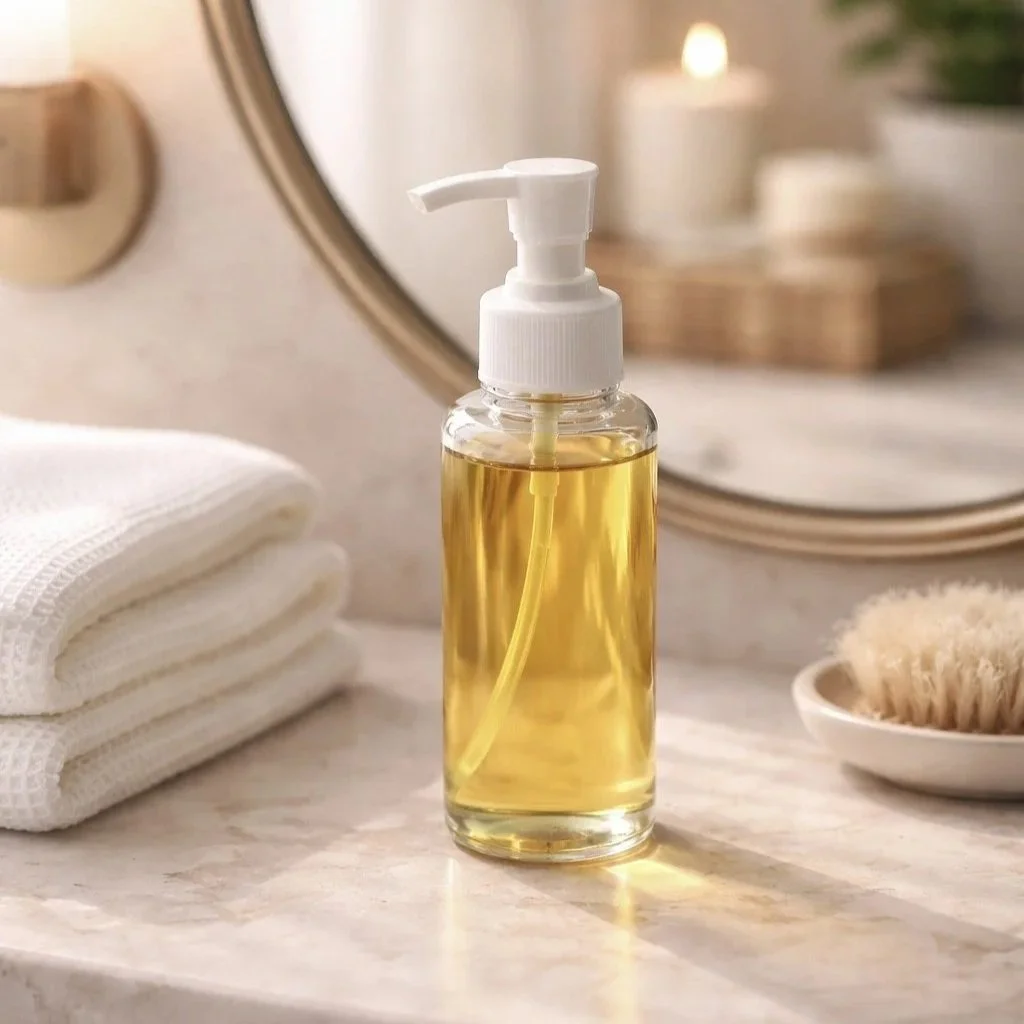
I keep it very low-effort. I start with dry skin and dry hands. I apply a small amount of oil and gently massage it into my face for about 30 seconds.
Next, I take a very warm (not scalding) damp washcloth and press it over my entire face for a few seconds. The warmth helps to loosen everything and makes it easier to remove the oil. Then I gently wipe it away, paying a little extra attention to areas that tend to get oilier, like my forehead and nose.
My skin feels clean afterward—not tight—with just a light softness left behind. If anything feels greasy, it’s usually because too much product was used or it wasn’t fully removed.
The Oil You Use Matters
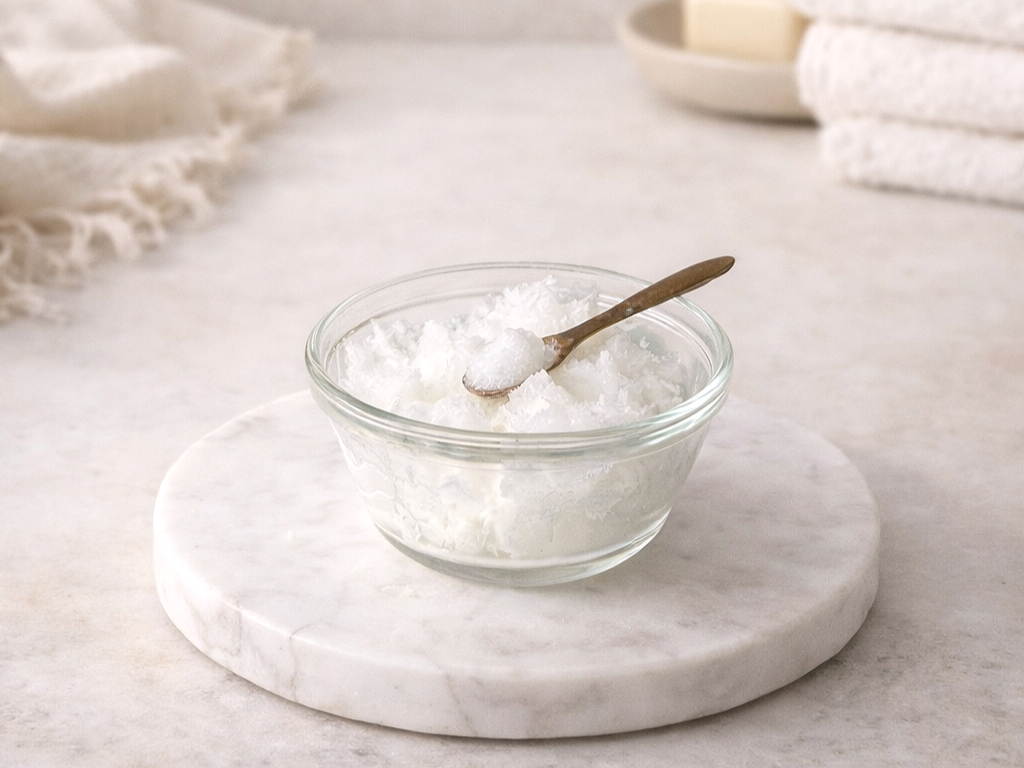
When I first started oil cleansing, I used plain coconut oil. It was something I already had in the kitchen, and it made testing the idea very easy. Since coconut oil is solid at room temperature, I would warm a small amount between my palms until it melted, then follow the same steps described above. For me, it worked well. My skin felt clean, soft, and balanced.
One reason I tend to stick with basic oils is that I prefer minimal ingredient lists. I don’t gravitate toward heavily fragranced products or formulas packed with unnecessary extras. For my skin, simpler usually works better. Another benefit of starting easy is that if you try it and don’t love it, you can always use the rest for stir-frying. Not many skincare experiments come with that option.
Coconut oil isn’t for everyone though. Some skin types—especially very acne-prone skin—may find it too heavy.
If you prefer something lighter or more specifically formulated for the face, a cleansing oil like the DHC Deep Cleansing Oil is another option. It’s designed to rinse cleanly and feel less heavy than straight kitchen oils, which can make it a good fit for oilier or combination skin.
The goal isn’t to use the richest oil available, but to use just enough to dissolve buildup gently—without leaving your skin feeling stripped.
When Oil Cleansing Might Not Be The Best Fit
Oil cleansing works well for many people, but it isn’t automatically right for everyone.
If your skin is severely acne-prone, actively inflamed, or under prescription treatment, it’s worth being cautious. Adding oil—even temporarily—may not be appropriate without professional guidance.
It’s also important to remove the oil thoroughly. Leaving heavy residue behind can lead to congestion, especially if your skin already struggles with clogged pores.
As with most skincare, the key is paying attention to how your skin responds. If it feels balanced and calm, you’re likely on the right track. If it feels heavy, irritated, or more congested, it may not be the best method for you.
Clean doesn’t have to mean tight. And balanced doesn’t have to mean complicated. Sometimes it’s just about using the right amount—and then letting your skin be.
Pantry optional.