
Blog
Simple Routines, thoughtful choices, and everyday life.
Nothing complicated. Just what actually helps.
10 Things That Help Me Look More Put Together (Without Spending a Fortune)
Looking more put together doesn’t have to mean more makeup, more products or more time. These are the simple habits and low-effort beauty products that make the biggest difference for me.
This post contains affiliate links. If you purchase through one of my links, I may earn a small commission at no additional cost to you. I only recommend products I actually use and like.
I love a good beauty product, but the older I get, the more convinced I am that looking good has surprisingly little to do with having a complicated beauty routine.
Some of the things that make the biggest difference aren’t beauty products at all. They’re the boring things we’ve all been told to do forever: sleep enough, eat well, drink enough water and move your body. Unfortunately, it turns out there was something to all of that.
Then there are a handful of ridiculously simple beauty tricks that do just enough to make me look a little more awake, healthy and put together without requiring a full face of makeup or an hour in the bathroom.
These are the ones that have earned a permanent place in my routine.
[ SKIP TO PRODUCT RECOMMENDATIONS ↓ ]
1. Getting Enough Sleep
I wish there were a more exciting answer, but I don’t think I’ve found a beauty product that can compensate for consistently not getting enough sleep.
When I’m well rested, my skin looks better, my eyes look brighter, and I generally look healthier. When I’m not, I can pile things on my face all I want, but there’s only so much concealer can do.
I’ve also stopped treating needing enough sleep as something I should somehow outgrow. Some people seem perfectly functional on six hours. I am not one of those people.
Getting enough sleep isn’t always possible, obviously. But when I can prioritize it, it’s probably the single biggest thing I can do for how I look and feel the next day.
2. Walking Regularly
Walking is another annoyingly simple answer.
I don’t have an elaborate workout routine. But when I’m consistently walking, I notice it. I feel better, I have more energy, my posture is better, and over time it makes a difference in how my clothes fit.
There’s also something about getting outside and moving that makes me feel more like a functioning human being, which arguably helps with looking like one too.
I’m not trying to turn every walk into a workout. I’m mostly trying to move my body regularly enough that it remembers that’s one of its jobs.
3. Staying Hydrated
Hydration isn’t going to erase wrinkles or magically give anyone perfect skin. But being under-hydrated certainly doesn’t help me look or feel my best.
I’ve learned that I feel noticeably better when I’m intentional about drinking enough throughout the day rather than realizing at 4:00 that I’ve basically been surviving on coffee.
I have a simple hydration drink I make regularly that helps me stay on top of it without obsessing over some enormous daily water goal.
You can find the recipe for my natural hydration drink here.
For me, consistency matters much more than trying to drink a heroic amount of water all at once.
4. Eating Enough Protein
Protein became much more important to me once I started paying attention to how much I was actually eating.
It’s surprisingly easy for me to eat a meal that technically fills me up without getting very much protein at all. Being more intentional about it helps me build meals that are actually satisfying and gives my body the raw materials it needs to maintain things like muscle, skin and hair.
I’ve found little ways to add more without completely changing how I eat—including putting protein in my coffee, because apparently we’ve reached that point.
I don’t track every gram or try to make every meal perfect. I just try to make protein one of the things I think about when I’m putting a meal together.
5. Eating Nutrient-Dense Foods
This goes along with protein, but I think it’s worth separating.
I’ve become much less interested in finding the “perfect” diet and much more interested in making sure I’m regularly eating foods that actually bring something to the table: fruits, vegetables, healthy fats, whole grains, protein and foods with plenty of vitamins and minerals.
That doesn’t mean everything I eat has to qualify as a health food. It absolutely does not.
I just feel and look better when most of what I’m eating is giving my body something useful.
It’s not a quick beauty hack. It’s the decidedly unexciting long game.
6. Wearing Tinted Sunscreen
And now, finally, an actual beauty product.
Tinted sunscreen has become one of my favorite shortcuts because it does several jobs at once. I get the daily sun protection I want, while the tint evens out my skin tone and gives me just enough glow.
Basically, it looks like my skin—only better.
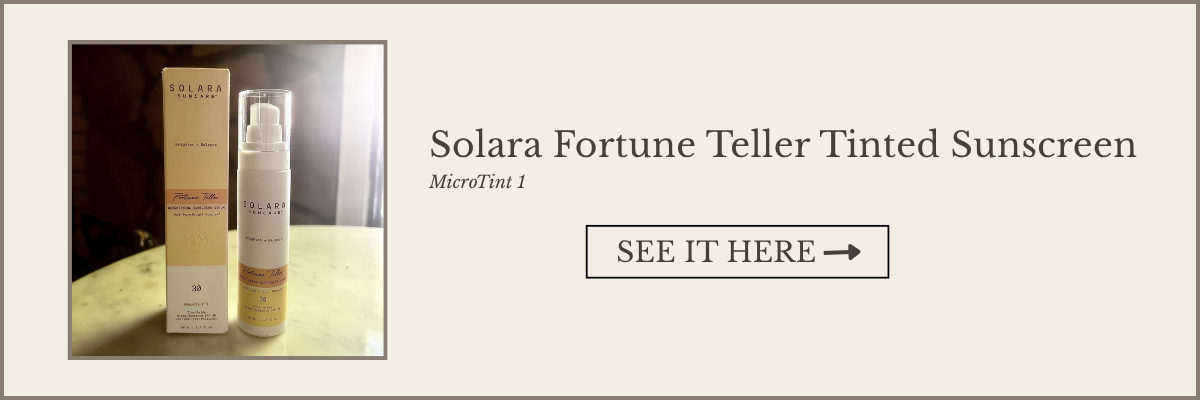
I use Solara Suncare Fortune Teller Tinted Sunscreen Serum in Tint 1. There’s also another tint available for darker skin tones. On me, Tint 1 gives just enough coverage to even things out while still looking like my actual skin, and most days I don’t feel like I need foundation over it.
I also like the added protection a tinted sunscreen can provide against visible light.
It’s one of the easiest ways I’ve found to look a little more polished in less than a minute.
7. Using Sunless Tanning Drops
A little bit of color makes a surprisingly big difference on me. I don’t want to look dramatically tan; I just like looking slightly less like I haven’t seen daylight in six months.
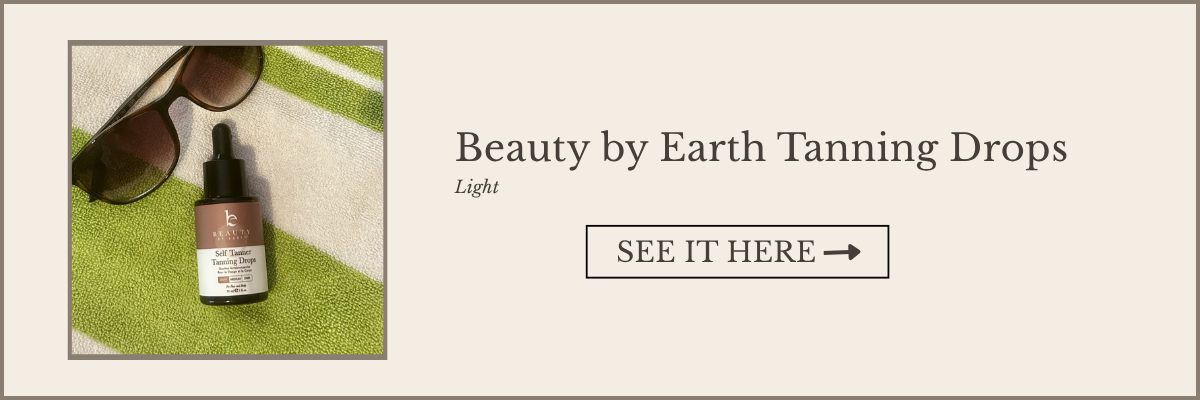
I’ve been using Beauty by Earth Self Tanner Tanning Drops, and I much prefer them to a traditional self-tanning lotion. You mix the drops into your own face or body moisturizer, which means I can use products I already know I like and control exactly how much color I want.
I’m currently using the Light shade, but the color is buildable and there are other shades available. I can add just a few drops when I want a subtle bit of warmth or build it up when I want more color. It lasts several days on me, doesn’t have that strong self-tanner smell, and I haven’t had problems with it transferring onto my clothes.
I also like that it’s EWG Verified. Not every product I use checks every “clean beauty” box, and I’m not interested in making myself crazy trying to achieve that. But when I’m applying something regularly over a large area of my skin, I appreciate finding an option with ingredients I feel comfortable using.
Mostly, it’s just incredibly easy. I can use the same bottle on my face and body, make the color as subtle as I want, and look a little more alive without intentionally baking myself in the sun.
8. Refreshing My Hair With a Gloss
My natural hair color is a fairly dull, mousy brown, and I have a few scattered grays coming in. I’m not particularly interested in completely covering them, but I do like everything to look a little more intentional.
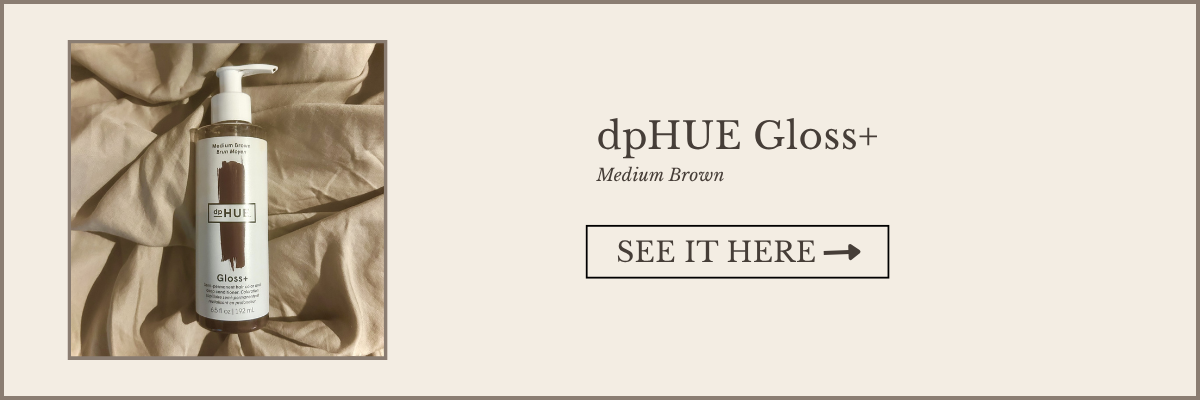
I’ve been using dpHUE Gloss+ in Medium Brown, and it’s almost perfect for that.
It doesn’t completely cover my scattered grays. Instead, it gives them just enough tint that they blend into the rest of my hair and look a little more like highlights. It also adds some warmth and evenness to my natural brown, which keeps the whole thing from looking quite so dull.
The other reason I like it is that it feels more like a conditioning treatment than hair color. My hair looks noticeably shinier and softer afterward.
It’s a subtle difference, which is probably exactly why I like it. My hair doesn’t suddenly look “colored.” It just looks better.
9. Curling My Lashes + Tubing Mascara
This is probably the highest return I get from sixty seconds of effort.
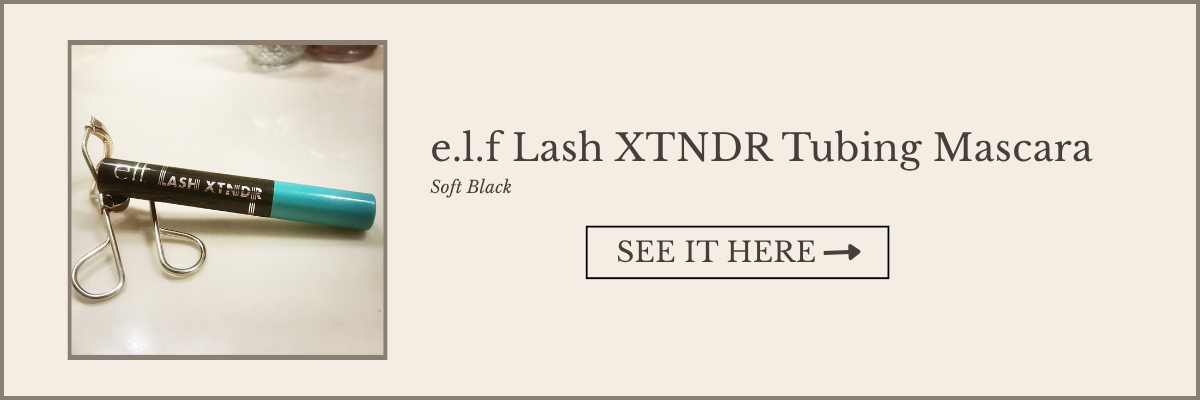
My lashes are fairly straight, so curling them immediately makes my eyes look more open and awake. Then I use e.l.f. Lash XTNDR Tubing Mascara in Soft Black.
I’ve tried more expensive mascaras, and this one works just as well—if not better—for me. The tubing formula makes my lashes look noticeably longer and stays where I put it instead of slowly migrating underneath my eyes. I also prefer the softer look of Soft Black for everyday makeup.
The combination is simple: curl, mascara, done.
Even when I’m wearing very little makeup, it makes me look noticeably more awake and put together.
10. Using a Lip Stain
I’ve realized I don’t necessarily want my lips to look like I’m wearing lipstick. I mostly want them to look like my actual lips—just with a little more life in them.
Wonderskin Lip Stain has become one of my favorite ways to do that.
I have two shades I particularly like. Lovely gives me a very natural lip color with a little warmth and brown to it, while Whimsical gives my lips more of a natural pinky blush.
Both basically make my lips look like they’re naturally a prettier color. Instead of looking washed out, they look a little more flushed, youthful and plump without looking like I’ve slathered on lipstick or gloss.
And then there’s the best part: the color actually stays.
I can eat, drink and go about my day without constantly checking or reapplying it. On me, the stain lasts for several hours and gradually fades while still looking like my own lip color.
It’s exactly the kind of makeup I like at this point—something that makes a noticeable difference without looking like I did very much.

The Point Isn’t to Do More
Looking more put together used to feel like something that required more: more makeup, more products, more time, more effort.
I’m increasingly finding the opposite to be true.
The boring foundational things—sleep, movement, hydration and eating well—probably do more heavy lifting than anything in my makeup bag. Then a few strategically chosen products can take care of the rest.
I don’t do all ten of these things perfectly every day. That’s not really the point.
They’re just the things I’ve found give me the most return for the least amount of effort. And at this point, that’s exactly what I want from a beauty routine.
Shop My Favorites
If you skipped directly to this part, I respect that.
How To Know If Your Skincare Routine Is Actually Working—Before You Switch It Again
Results don’t show up overnight. Here’s how to give your skincare routine a fair chance — and how to tell if it’s truly working.

You start a new skincare routine convinced this might finally be the one. You wash your face, apply everything carefully, and look in the mirror the next morning expecting to see something amazing — brighter skin, smoother texture, some small sign that it’s working. By day three, you’re checking in different lighting. By the end of the week, you’re wondering if you should switch again. You start analyzing your skin like you’re studying for an exam.
The truth is, most skincare works on a slower timeline than we’d like. Our skin renews itself gradually, usually over the course of four to six weeks, which means a few days simply isn’t enough time. Subtle improvements are often the first signs that something is working — less redness, fewer new breakouts, skin that feels a little more balanced. It’s easy to miss those changes when you’re looking for something dramatic.
If you really want to know whether a routine is working, you have to give it a fair trial. For most products, that means staying consistent for at least four to six weeks before making a decision. Changing things too quickly makes it impossible to see what’s helping and what isn’t. When you let a routine settle, you give your skin time to respond — and you give yourself a better sense of what’s actually happening.
If you’re still figuring out what belongs in your routine to begin with, I share how I approach that decision here.
The Adjustment Period
If you’re using active ingredients like retinol, exfoliating acids, or certain acne treatments, you may notice an initial increase in breakouts. This is sometimes called “purging” and it can happen as those ingredients speed up skin turnover and bring underlying congestion to the surface. It can feel discouraging — especially when you were hoping to finally see improvement.
Purging usually appears in areas where you already tend to break out and typically settles within a few weeks. It’s part of the adjustment process for some people — not necessarily a sign that your routine is failing.
During this time, it can help to keep everything else simple. Avoid adding more new products, resist the urge to over-exfoliate, and focus on gentle cleansing and consistent moisturizing. Giving your skin steady support while it adjusts often makes the process feel much more manageable.
How to Evaluate Your Routine Clearly
Instead of looking for immediate improvement, try asking better questions.
Am I experiencing fewer flareups than before?
Does my skin feel comfortable throughout the day?
Am I constantly trying to fix something — or has that urge settled down?
It can help to compare your skin to how it felt before you started, not to the version you imagined after watching a perfectly lit skincare video. The goal isn’t perfection. It’s progress. And progress is often easier to see when you step back instead of scrutinizing every detail.
When It’s Not Working — And You Should Stop
Patience is important, but it’s not the same as ignoring clear signs that something isn’t right.
If your skin feels persistently irritated, tight, or uncomfortable, that’s worth paying attention to. Breakouts that steadily worsen instead of settling down, stinging that lasts beyond the first few applications, or redness that doesn’t calm over time are all signals that a product may not be a good fit for you.
There’s a difference between giving something a fair chance and pushing through obvious irritation. Skincare should support your skin, not feel like something you have to endure. If your routine feels like it’s making things worse instead of better, it may be time to simplify or remove one product and let your skin reset.
Skincare doesn’t usually announce itself with obvious change. More often, it shifts slowly — a little less irritation, a little more balance, a little more steadiness than before. It can be hard to trust that kind of progress when we’re used to expecting transformative results.
When you give your routine time, observe it honestly, and adjust only when something isn’t truly working, you start to understand your skin instead of constantly reacting to it.
Waiting may feel uncomfortable, especially when you want visible change. But sometimes the most effective routines are the ones you almost forget about — the ones that quietly do their job while you move on with your day. You’re not behind. You’re just in the middle of the process.
If you’re thinking about starting over completely… maybe don’t.
How To Choose Skincare Products—Without Getting Overwhelmed
Choosing skincare doesn’t have to feel overwhelming. Here’s a simple, steady way to decide what belongs in your routine — and what doesn’t.
There was a time when choosing a skincare product for myself felt equal parts overwhelming and exhilarating. Every label promised something different — brighter, smoother, firmer, clearer skin. Standing in the aisle or scrolling online, I’d feel a surge of optimistic hope that this one would finally be the thing that changed everything. I think, deep down, I believed that if I found the right product, my skin would somehow look flawless — like I’d stepped out of a magazine. That’s the goal, right?
But that excitement didn’t translate into reality. Even after bringing something home, I often felt unsure — still scanning the ingredient list, still wondering if I had missed something better. Eventually, I realized the problem wasn’t that I hadn’t found the perfect product. It was that I didn’t have a clear way of deciding in the first place. I was reacting to promises instead of asking whether a product actually fit into the simple routine I was trying to build.
Once I understood that, choosing skincare became much less emotional. I stopped looking for something that would transform my skin overnight and started looking for products that supported what I was already doing. Instead of asking, “Will this fix everything?” I started asking clearer questions.
I Ask Myself a Few Simple Questions
Now, before I add anything new to my routine, I pause and ask myself a few simple questions.
First, does this product support the foundation I already have? At it's core, my routine is built around a gentle cleanser, a simple moisturizer, and sunscreen. I explain that approach in more detail here. Anything new should fit into that structure without disrupting it. If it complicates things or overlaps unnecessarily, I usually don’t need it.
Second, are the ingredients straightforward and purposeful? I don’t expect perfection, and I’m not looking for the “cleanest” label possible. But I do look for formulas that feel deliberate — without excessive fragrance or long lists of unnecessary additions. Over time, I’ve learned that simpler formulas often work just as well, if not better, than products designed to do everything at once.
And finally, I ask myself: Am I interested in this because I need it, or because it sounds exciting? I’ve bought products simply because I loved the packaging, the name, or the feeling the brand created. Sometimes it was popular. Sometimes the models looked effortless and glowing, and I thought maybe I would too. There’s nothing wrong with appreciating good branding — it’s meant to draw us in. But I’ve found that my skin responds best when I’m steady, not reactive.
From Searching to Supporting
Gradually, this way of choosing has made skincare feel lighter. I’m not scanning shelves for the next breakthrough or wondering if I’m one product away from better skin. I’m simply looking for things that support what’s already working.
In a small way, it’s changed more than just my routine. Paying attention to ingredients instead of promises, to consistency instead of excitement, has made my whole process steadier. More intentional. Less reactive.
I’ve started to notice that the same principal applies elsewhere in life. It’s easy to be drawn in by what looks beautiful or sounds transformative. But usually, what lasts is simpler — steady habits, thoughtful choices, and things built on substance rather than shine.
Choosing skincare doesn’t feel like chasing anymore. It feels like caring. And that shift — from searching for what’s flawless to supporting what’s already there — has been enough.
And speaking of enough, that’s enough for now.
How To Start a Simple Skincare Routine That Actually Works
A calm, simple approach to skincare that focuses on supporting your skin, not constantly trying to change it.
If I’m being honest, I didn’t simplify my skincare routine because I had a sudden realization about ingredients or skin barriers. It mostly stemmed from choice fatigue and a low budget.
For years, I tried different products—sometimes splurging—but always searching for the right combination that would somehow change everything. A new serum. A different moisturizer. Something that promised brighter, clearer, smoother skin.
Sometimes things helped. Sometimes they didn’t. There was quite a bit of disappointment.
Eventually, I stopped trying so hard. I used fewer products simply because it was easier. And surprisingly, that’s when my skin started to look and feel its best. Not perfect. Just calmer. More balanced. Probably fine.
You Do Not Need a 10-Step Routine
Marketing leads us to believe that more products mean better results. When one thing isn’t working, the natural instinct is to add something else. A new treatment. A different serum. Something stronger. But skin doesn’t always respond well to being constantly adjusted. In many cases, too many products can overwhelm it, leading to irritation, dryness, or breakouts that weren’t there before.
Skin tends to do best with consistency and gentle support. When you use fewer products, it becomes easier to see what’s actually helping and what isn’t. Your skin has space to regulate itself without constantly reacting to something new. And your routine becomes easier to maintain, which matters more than any individual product ever will.
A simple routine isn’t a compromise. It’s often the point where things finally start to work.
I Choose Products Based on Ingredients, Not Marketing
At some point, I stopped paying attention to what products promised and started paying attention to what they contained.
Packaging can be beautiful. Words like brightening, renewing, and repairing sound reassuring. But I’ve learned that simple formulas with fewer, more familiar ingredients often work just as well—sometimes better—than products designed to do everything at once.
When I’m considering something new, I usually look it up in the Environmental Working Group’s (EWG) Skin Deep database. It gives products a safety rating based on their ingredients, which helps me better understand what I’m putting on my skin. It doesn’t mean everything has to be perfect, and I don’t treat it like a strict rule. It’s just a tool that helps me choose more intentionally.
Over time, this naturally led me toward simpler products. Fewer ingredients. Less fragrance. Nothing unnecessary. And without trying to overhaul my routine all at once, it slowly became calmer. Easier to maintain. Easier to trust.
Start With Just Three Products
At its core, a skincare routine only needs to do a few things.
Clean your skin. Support it. Protect it.
Everything else is optional.
For me, it helped to realize that the skin on my face isn’t fundamentally different from the skin on the rest of my body. The skin on my arms and shoulders isn’t perfect, but it’s healthy. I don’t layer multiple products on it or constantly try to change it. I keep it clean. I moisturize it when it’s dry. I protect it from the sun and elements. And then I leave it alone.
My face appreciates the same kind of care.
A gentle cleanser removes buildup from the day without stripping the skin. A simple moisturizer helps maintain balance and prevents dehydration. And sunscreen, worn during the day, protects your skin from long-term damage that isn’t always visible right away.
That’s enough to create a stable foundation. Once those basics are in place, your skin has the support it needs to function normally—without being pushed, corrected, or constantly adjusted. Everything else can come later, if you decide you need it.
If you’d like to see exactly how I structure my own simple routine, I break it down in detail in my 3-Step Skincare Routine here.
A Simple Routine Looks Like This
Morning:
Gentle Cleanser (if needed)
Moisturizer
Sunscreen
Evening:
Gentle cleanser
Moisturizer
That’s it.
If you’re curious about the exact products I’m currently using, you can see my full routine here.
You Can Always Add More Later—But You Don’t Have To
There is nothing wrong with trying new products or adding something specific if your skin needs it. But those additions should come from a place of intention, not pressure.
A simple routine gives you a stable starting point. It allows you to understand your skin instead of constantly reacting to it. And it removes the subtle feeling that you’re always one product away from fixing something.
For me, simplifying didn’t happen all at once. It happened gradually, mostly by doing less.
Everyone’s skin is different, and this is simply what has worked for me.
In the end, less turned out to be enough.
—Probably Fine Living
How To Oil Cleanse—Even If You Have Oily Skin
Oil cleansing might sound counterintuitive, especially for oily skin. Here’s how it works - and why it can leave skin clean without feeling stripped.
This post contains affiliate links. If you choose to purchase through them, I may earn a small commission at no additional cost to you. I only share products I genuinely use and love.
When I was younger, my skin was much oilier than it is now. By midday, my forehead would shine no matter what I used, so the idea of putting oil on my face felt completely wrong.
But at some point, I heard a simple truth: oil dissolves oil. Instead of trying to scrub everything away, the idea was to gently dissolve buildup with something that could actually break it down. That made enough sense that I decided to try it.
What surprised me wasn’t just how well it removed makeup and sunscreen. It was how clean my skin felt without that tight, over-cleansed feeling afterward.
Why Oil Cleansing Works
The logic behind oil cleansing is surprisingly straightforward. Makeup, sunscreen, and even the oil your skin produces are all oil-based. Using oil helps break down those layers without aggressively stripping the surface.
Instead of foaming and removing everything, oil works more gently. It loosens what doesn’t belong there, while leaving your skin barrier intact. That’s why it can feel clean without being tight.
How I Oil Cleanse (The Simple Way)
I keep it very low-effort. I start with dry skin and dry hands. I apply a small amount of oil and gently massage it into my face for about 30 seconds.
Next, I take a very warm (not scalding) damp washcloth and press it over my entire face for a few seconds. The warmth helps to loosen everything and makes it easier to remove the oil. Then I gently wipe it away, paying a little extra attention to areas that tend to get oilier, like my forehead and nose.
My skin feels clean afterward—not tight—with just a light softness left behind. If anything feels greasy, it’s usually because too much product was used or it wasn’t fully removed.
The Oil You Use Matters
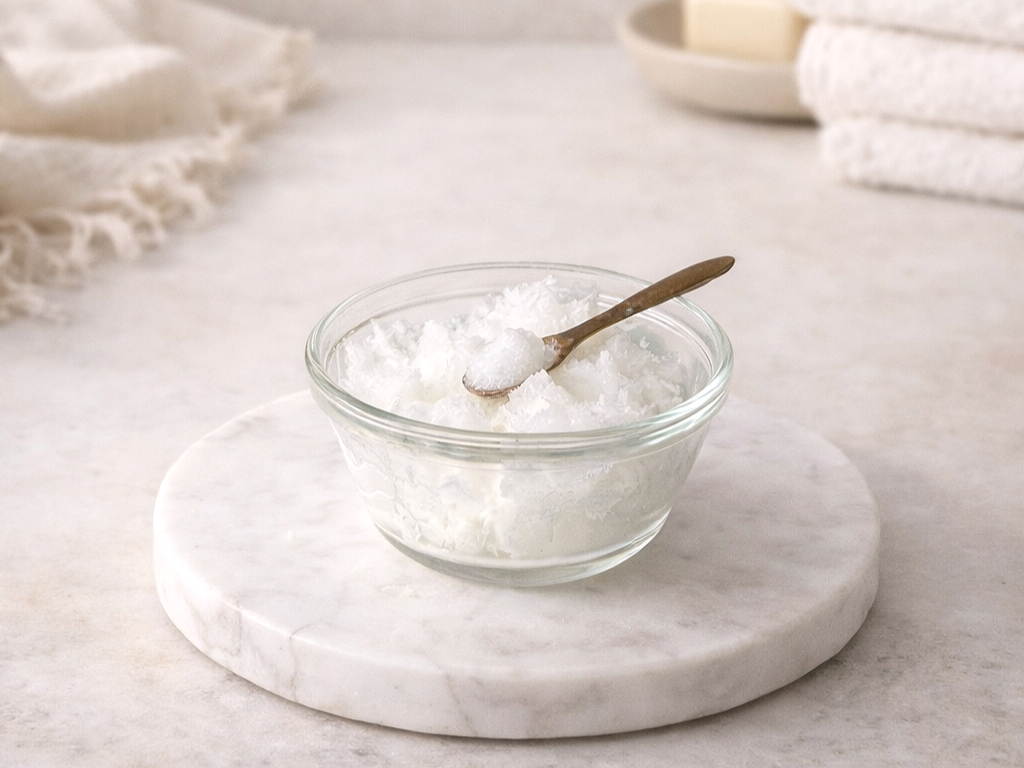
When I first started oil cleansing, I used plain coconut oil. It was something I already had in the kitchen, and it made testing the idea very easy. Since coconut oil is solid at room temperature, I would warm a small amount between my palms until it melted, then follow the same steps described above. For me, it worked well. My skin felt clean, soft, and balanced.
One reason I tend to stick with basic oils is that I prefer minimal ingredient lists. I don’t gravitate toward heavily fragranced products or formulas packed with unnecessary extras. For my skin, simpler usually works better. Another benefit of starting easy is that if you try it and don’t love it, you can always use the rest for stir-frying. Not many skincare experiments come with that option.
Coconut oil isn’t for everyone though. Some skin types—especially very acne-prone skin—may find it too heavy.
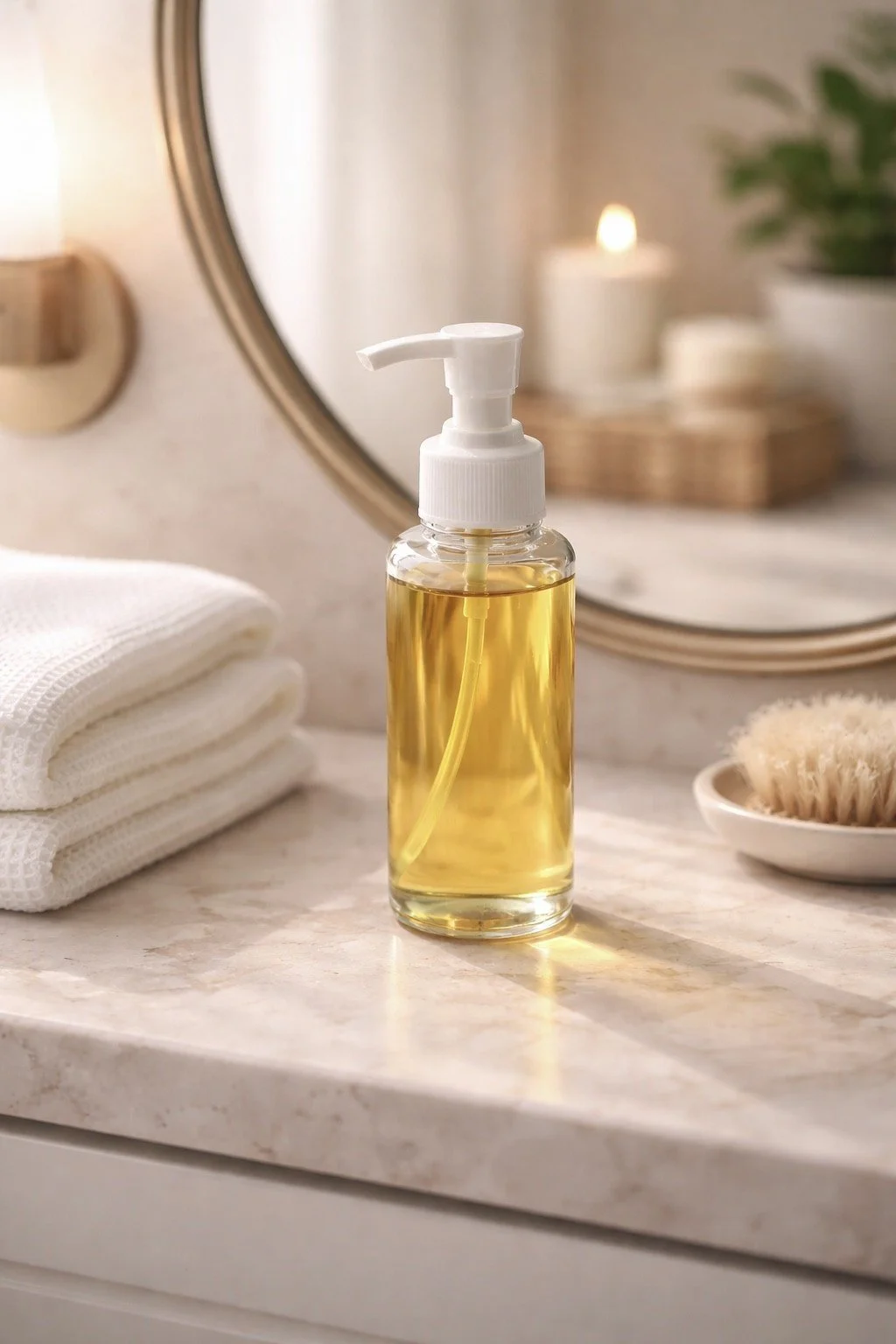
If you prefer something lighter or more specifically formulated for the face, a cleansing oil like the DHC Deep Cleansing Oil is another option. It’s designed to rinse cleanly and feel less heavy than straight kitchen oils, which can make it a good fit for oilier or combination skin.
The goal isn’t to use the richest oil available, but to use just enough to dissolve buildup gently—without leaving your skin feeling stripped.
When Oil Cleansing Might Not Be The Best Fit
Oil cleansing works well for many people, but it isn’t automatically right for everyone.
If your skin is severely acne-prone, actively inflamed, or under prescription treatment, it’s worth being cautious. Adding oil—even temporarily—may not be appropriate without professional guidance.
It’s also important to remove the oil thoroughly. Leaving heavy residue behind can lead to congestion, especially if your skin already struggles with clogged pores.
As with most skincare, the key is paying attention to how your skin responds. If it feels balanced and calm, you’re likely on the right track. If it feels heavy, irritated, or more congested, it may not be the best method for you.
Clean doesn’t have to mean tight. And balanced doesn’t have to mean complicated. Sometimes it’s just about using the right amount—and then letting your skin be.
Pantry optional.
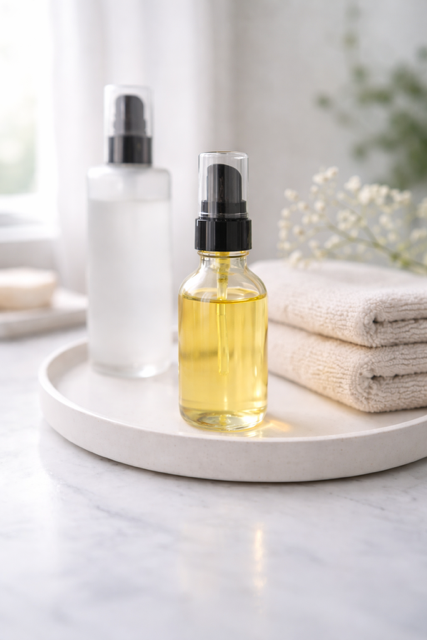
Why Face Oil Isn’t Just For Dry Skin—It Might Help Oily Skin Too
Face oil isn’t just for dry skin. A lightweight oil can support the skin barrier and help restore balance - even for oily or combination skin.
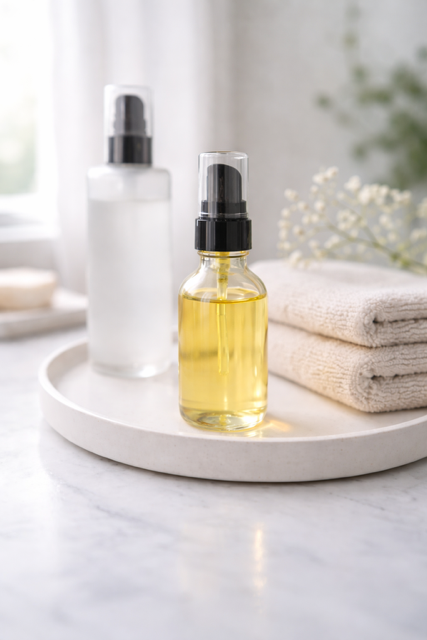
This post contains affiliate links. If you choose to purchase through them, I may earn a small commission at no additional cost to you. I only share products I genuinely use and love.
Face oil has often been treated like the enemy of oily skin.
If your skin already feels shiny by midday, the last thing you want is something that promises “more glow”. Most of us have been taught that oil leads to clogged pores, breakouts, and more shine—so we reach for stronger cleansers and lighter moisturizers instead.
But the relationship between oil and oily skin isn’t that simple. In many cases, stripping the skin can actually make oiliness worse. And in the right form, a lightweight face oil can help restore balance instead of disrupting it.
The Common Myth
The belief that “oil causes oily skin” sounds logical. On the surface, it makes sense—if oil is visible, removing it feels like the obvious solution. But this idea confuses two different things: surface oil and skin balance.
For years, skincare advice for oily skin focused almost entirely on removing oil. “Oil-free” became the gold standard, and matte skin was the goal. The more a product promised to control shine or dry things out, the more convincing it sounded. It’s only more recently that balance and barrier health have become part of the conversation.
What Actually Causes Oily Skin
Oily skin isn’t just about having “too much oil”. It’s usually about imbalance.
Your skin naturally produces sebum to protect and moisturize itself. That oil is part of a healthy skin barrier. But when the barrier is disrupted—from harsh cleansers, over-exfoliating, or skipping moisture—the skin often responds by producing even more oil to compensate.
In other words, sometimes oily skin isn’t oily because it has too much oil. It’s oily because it’s trying to protect itself.
Dehydration can also play a role. Skin can be both oily and dehydrated at the same time. When water levels are low but oil production is high, the surface can look shiny while still feeling tight underneath. That’s when stronger cleansers and “oil-free everything” can make things worse instead of better.
Hormones, stress, climate, and genetics all matter too. But one of the most common patterns is this cycle: Strip the skin → skin overproduces oil → strip it again → repeat.
A gentle, balanced routine works differently. Instead of fighting oil, it focuses on supporting the barrier so the skin doesn’t feel the need to overcorrect.
How a Lightweight Face Oil Can Help (Without Feeling Greasy)
When most people think of face oil, they picture something heavy and shiny that sits on top of the skin. But not all oils behave the same way.
Lightweight oils absorb quickly and are often rich in fatty acids that support the skin barrier. When used correctly, they don’t “add more oil” in the way people fear. Instead, they help seal in hydration—think of it as the final layer that keeps moisture from evaporating too quickly—while signaling to the skin that it doesn’t need to overproduce sebum to protect itself.
The key is using the right amount and applying it at the right time. For oily or combination skin, a few drops are enough. Pressed gently into damp skin as the final step of a routine, a lightweight oil can lock in moisture without leaving a heavy residue. It should feel soft and balanced—not slick.
If it feels greasy, it’s usually one of three things:
Too much product
Applied on completely dry skin
Or an oil that’s too heavy for your skin type
Used thoughtfully, face oil isn’t about creating shine. It’s about restoring balance—especially for skin that’s been caught in the strip-and-overcorrect cycle.
Who Should (and Shouldn’t) Use a Face Oil
Face oil can work well for many skin types, but it isn’t necessarily for everyone.
It’s often helpful for:
Oily or combination skin that feels stripped or dehydrated
Skin that looks shiny but still feels tight
Anyone trying to support their skin barrier with a simple routine
Those living in dry climates or using drying active ingredients
When used in small amounts and layered properly, a lightweight oil can help maintain balance without clogging pores. That said, it’s not always the right choice. If your skin is severely acne-prone, inflamed, or under prescription treatment, adding an oil may not be appropriate without professional guidance. And heavier oils can feel suffocating on already congested skin. Patch testing and starting slowly are always wise.
Face oil isn’t a requirement. It’s a tool. And like most skincare tools, it works best when used intentionally.
The Face Oils I Use And Why
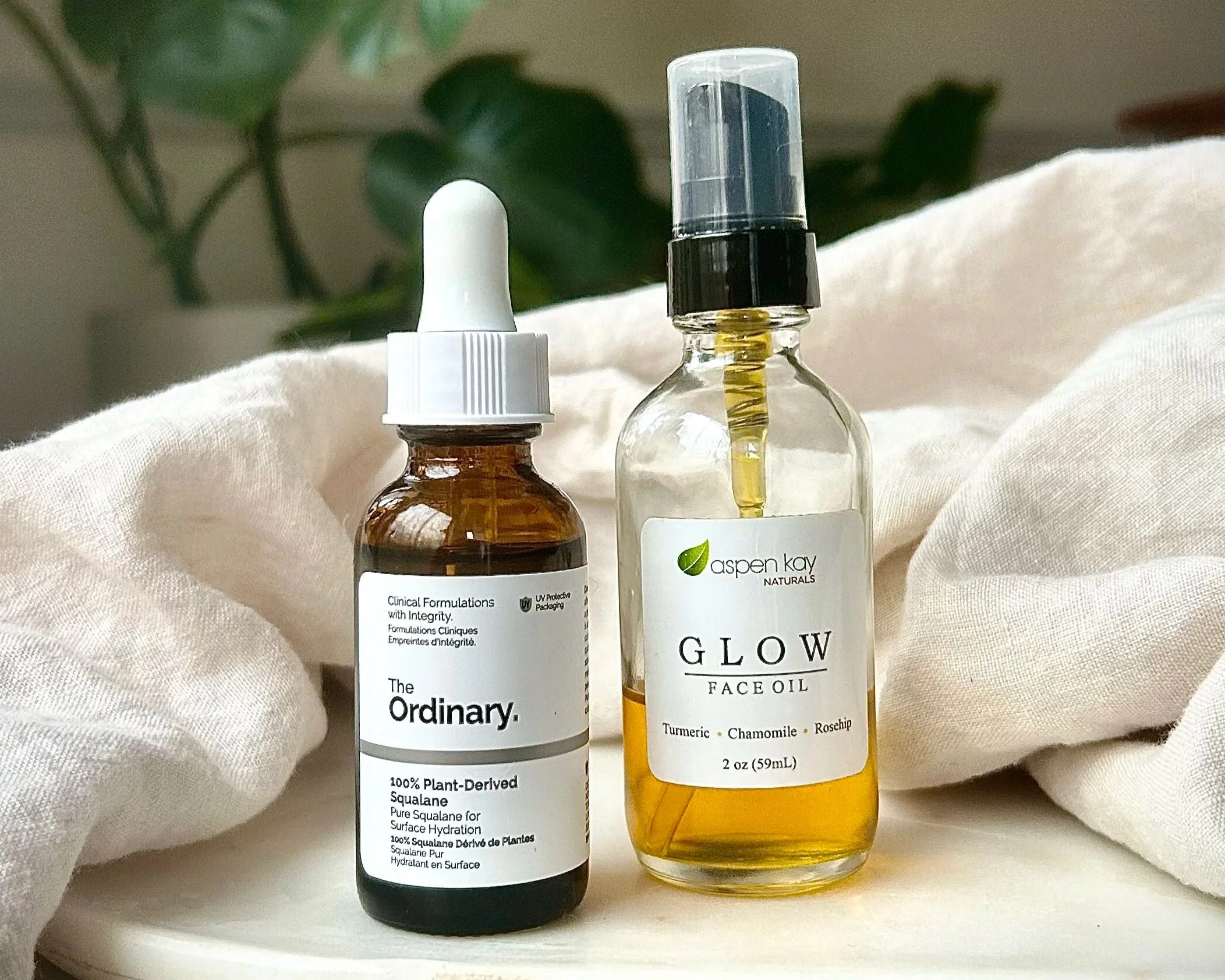
Personally, I tend to reach for lightweight oils that absorb quickly and don’t leave a heavy finish. Most often, I use the Aspen Kay Naturals Glow Face Oil. It’s simple, layers well at the end of a routine, and contains ingredients like rosehip and chamomile that support calm skin. I press a few drops into damp skin, and it feels soft and hydrated—not greasy. If you want to see how I pair it with cleanser and toner in a simple daily routine, you can read that here.
If your skin is very oily or you prefer something even more minimal, a simple squalane oil can be a good starting point. I’ve had good results with The Ordinary 100% Plant-Derived Squalane—it’s extremely lightweight, absorbs quickly, and feels less “oily” than many botanical blends.
Of course, these aren’t the only options, and not every oil will work for every skin type. But choosing something lightweight and starting slowly can make a noticeable difference. In my experience, balance almost always works better than extremes. Give your skin a couple of weeks to adjust, use a small amount, and let consistency do the work.
Oily skin doesn’t need to be stripped into submission. And skincare doesn’t need to be extreme to be effective. Simple adjustments, done consistently, often work better than constant changes.
Keep it simple.
The 3 Skincare Products I Use Every Single Day
Three gentle, affordable skincare products I use every day to keep my skin calm, hydrated, and healthy.
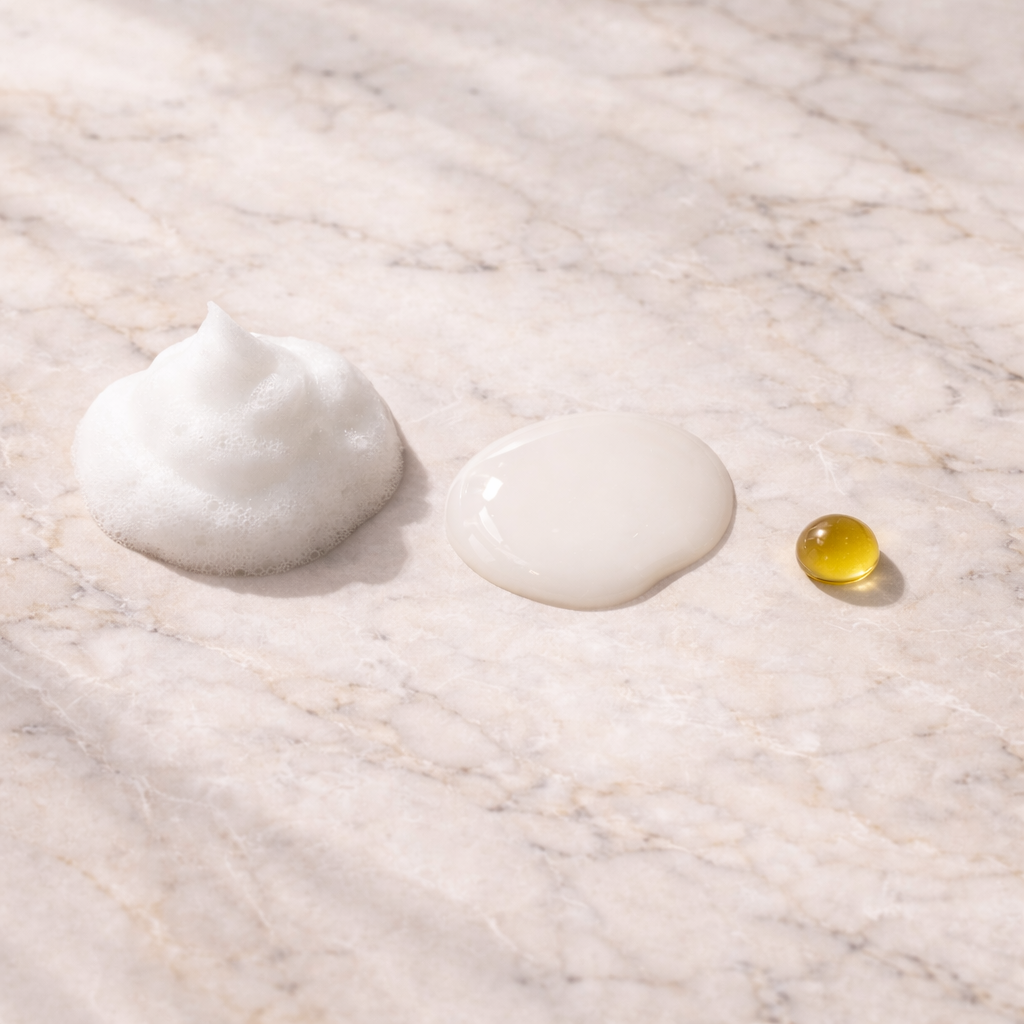
This post contains affiliate links. If you choose to purchase through them, I may earn a small commission at no additional cost to you. I only share products I genuinely use and love.
Let’s improve the situation.
These are three skincare products that make a visible difference without requiring a personality change or a 14-step routine.
For a long time, I thought good skin required a complicated and pricey routine. Multiple steps involving serums and treatments that implied I had both the time and emotional stability to maintain them. But over time, I realized my skin looks and feels its best when I keep things simple and consistent. Sure, there are extra treatments that can be added in as needed, but these three establish order.
I’ve tried plenty of other options and always came back to these. Simple, affordable care that keeps my skin calm, soft, and healthy with no added dyes or fragrances.
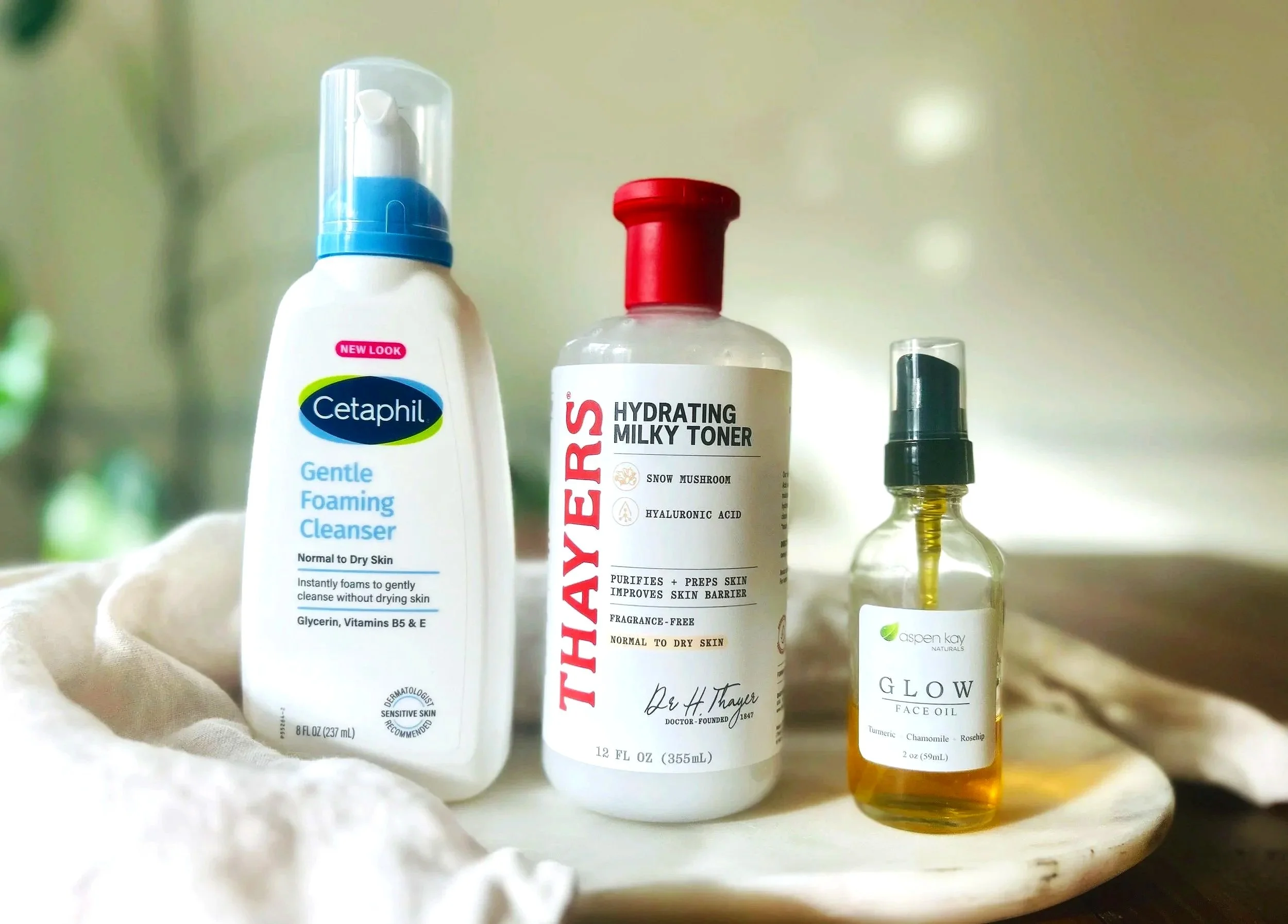
Step 1: A gentle cleanser
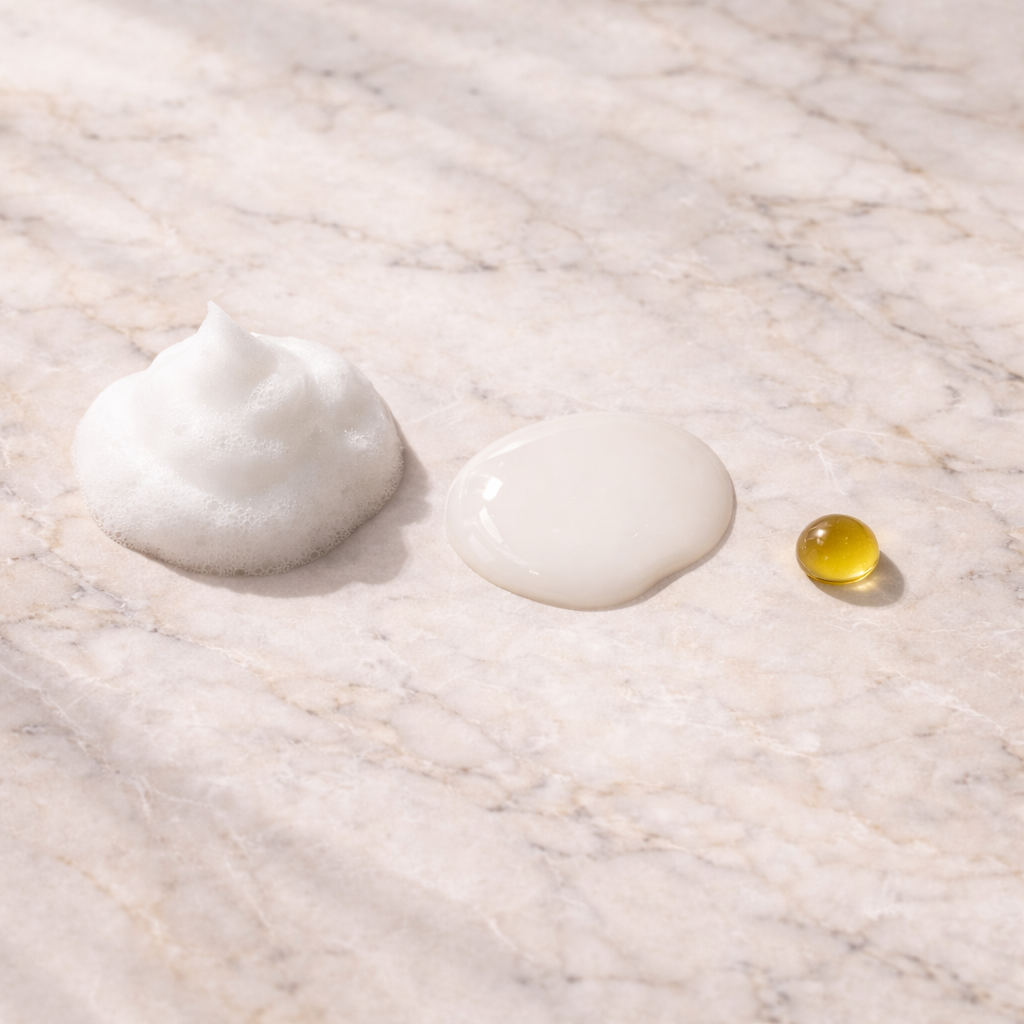
Each morning I simply give my face a good rinse with warm water, but at night I use Cetaphil Gentle Foaming Cleanser. It does exactly what I need it to do. It removes excess oil and makeup without making my skin feel tight or dry. The foam rinses right off, and my skin still feels soft and comfortable—not stripped.
Step 2: A hydrating toner
Next, I use Thayers Hydrating Milky Toner morning and night. It quietly removes anything left behind and restores a baseline level of hydration. Sometimes I use it as a traditional toner on a cotton pad, but often I just pour a small amount into my hands and press it directly into my skin. With hydrating snow mushroom and soothing elderflower and aloe vera, this toner adds immediate softness and moisturizes without feeling heavy.
Step 3: A simple face oil
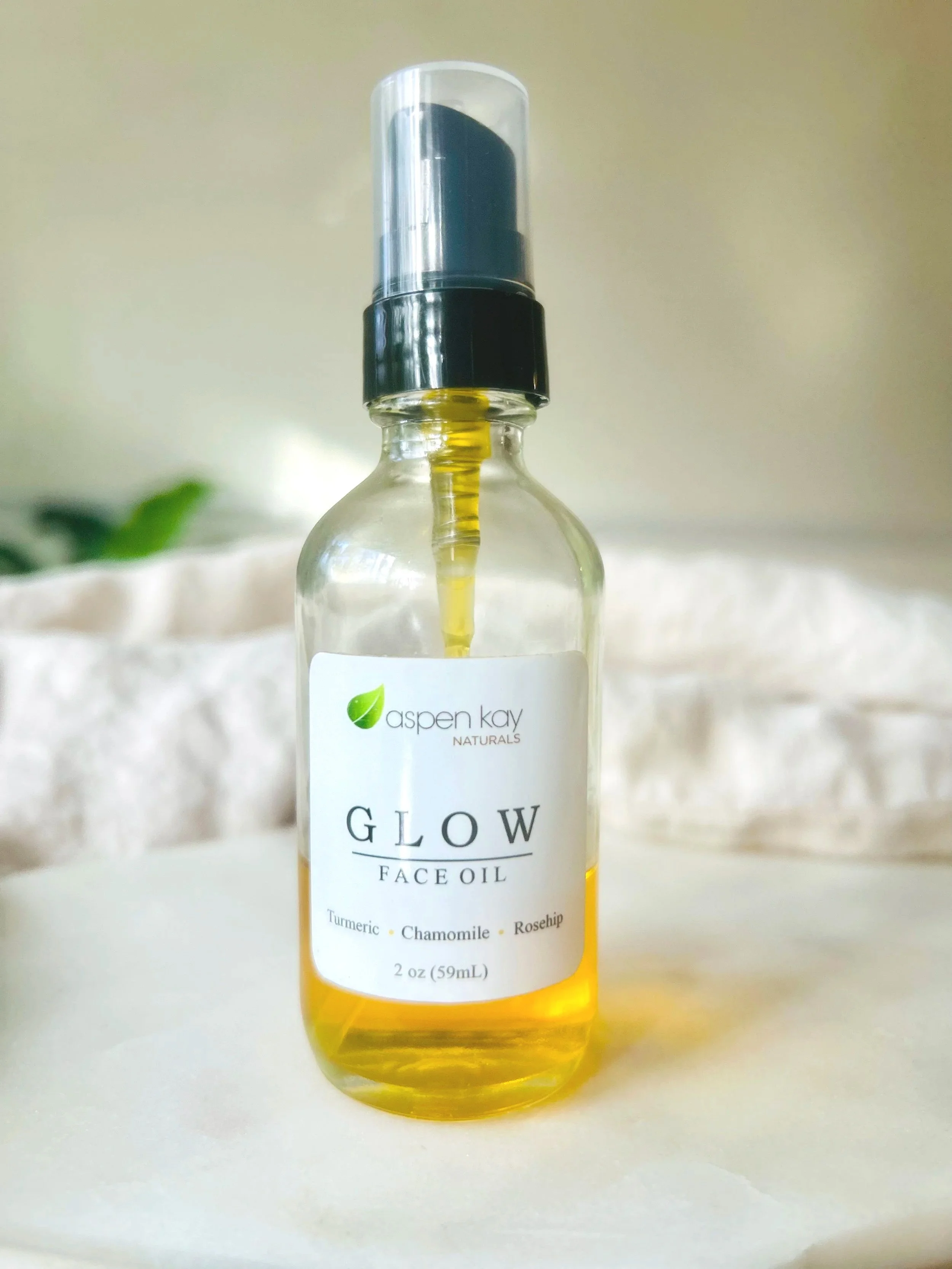
The last step is a quality face oil. It may seem counterintuitive to apply oil to your face, especially if your skin already feels oily or prone to breakouts. But your skin produces oil for a reason—it’s part of how it protects and maintains balance. When skin is repeatedly stripped with harsh or overly drying products, it can respond by producing even more oil in an effort to compensate. A well-chosen face oil helps support your skin’s natural barrier and seal in moisture, signaling that it’s safe and cared for. Over time, this can help even oily or acne-prone skin feel calmer, more balanced, and quietly healthy—never greasy, just comfortably nourished. I use Glow Face Oil from Aspen K Naturals.
One of the reasons I love the Aspen K Naturals Glow Face Oil is its thoughtful blend of calming, restorative ingredients. Turmeric helps support a brighter, more even-looking complexion, while chamomile is known for its soothing properties, making it especially helpful for skin that feels irritated or reactive. Rosehip oil is rich in essential fatty acids and vitamins that help nourish the skin and support its natural barrier. Together, these ingredients help skin feel balance, comforted, and quietly radiant.
I gently press a few drops into my skin, especially on my cheeks and forehead. This seals in moisture and leaves my skin feeling soft and comfortable. It also gives a subtle glow that makes my skin look healthier overall. Makeup or sunscreen glide effortlessly over it.
Why This Simple Routine Works
Skincare doesn’t need to be complicated to be effective. When each step supports the skin rather than overwhelms it, the result is balance. Cleansing creates a fresh foundation, toner restores comfort and hydration, and face oil seals everything in, leaving the skin feeling calm, supported, and healthy.
Anyway, that’s better.
Probably fine.