
Why Face Oil Isn’t Just For Dry Skin—It Might Help Oily Skin Too
This post contains affiliate links. If you choose to purchase through them, I may earn a small commission at no additional cost to you. I only share products I genuinely use and love.
Face oil has often been treated like the enemy of oily skin.
If your skin already feels shiny by midday, the last thing you want is something that promises “more glow”. Most of us have been taught that oil leads to clogged pores, breakouts, and more shine—so we reach for stronger cleansers and lighter moisturizers instead.
But the relationship between oil and oily skin isn’t that simple. In many cases, stripping the skin can actually make oiliness worse. And in the right form, a lightweight face oil can help restore balance instead of disrupting it.
The Common Myth
The belief that “oil causes oily skin” sounds logical. On the surface, it makes sense—if oil is visible, removing it feels like the obvious solution. But this idea confuses two different things: surface oil and skin balance.
For years, skincare advice for oily skin focused almost entirely on removing oil. “Oil-free” became the gold standard, and matte skin was the goal. The more a product promised to control shine or dry things out, the more convincing it sounded. It’s only more recently that balance and barrier health have become part of the conversation.
What Actually Causes Oily Skin
Oily skin isn’t just about having “too much oil”. It’s usually about imbalance.
Your skin naturally produces sebum to protect and moisturize itself. That oil is part of a healthy skin barrier. But when the barrier is disrupted—from harsh cleansers, over-exfoliating, or skipping moisture—the skin often responds by producing even more oil to compensate.
In other words, sometimes oily skin isn’t oily because it has too much oil. It’s oily because it’s trying to protect itself.
Dehydration can also play a role. Skin can be both oily and dehydrated at the same time. When water levels are low but oil production is high, the surface can look shiny while still feeling tight underneath. That’s when stronger cleansers and “oil-free everything” can make things worse instead of better.
Hormones, stress, climate, and genetics all matter too. But one of the most common patterns is this cycle: Strip the skin → skin overproduces oil → strip it again → repeat.
A gentle, balanced routine works differently. Instead of fighting oil, it focuses on supporting the barrier so the skin doesn’t feel the need to overcorrect.
How a Lightweight Face Oil Can Help (Without Feeling Greasy)
When most people think of face oil, they picture something heavy and shiny that sits on top of the skin. But not all oils behave the same way.
Lightweight oils absorb quickly and are often rich in fatty acids that support the skin barrier. When used correctly, they don’t “add more oil” in the way people fear. Instead, they help seal in hydration—think of it as the final layer that keeps moisture from evaporating too quickly—while signaling to the skin that it doesn’t need to overproduce sebum to protect itself.
The key is using the right amount and applying it at the right time. For oily or combination skin, a few drops are enough. Pressed gently into damp skin as the final step of a routine, a lightweight oil can lock in moisture without leaving a heavy residue. It should feel soft and balanced—not slick.
If it feels greasy, it’s usually one of three things:
Too much product
Applied on completely dry skin
Or an oil that’s too heavy for your skin type
Used thoughtfully, face oil isn’t about creating shine. It’s about restoring balance—especially for skin that’s been caught in the strip-and-overcorrect cycle.
Who Should (and Shouldn’t) Use a Face Oil
Face oil can work well for many skin types, but it isn’t necessarily for everyone.
It’s often helpful for:
Oily or combination skin that feels stripped or dehydrated
Skin that looks shiny but still feels tight
Anyone trying to support their skin barrier with a simple routine
Those living in dry climates or using drying active ingredients
When used in small amounts and layered properly, a lightweight oil can help maintain balance without clogging pores. That said, it’s not always the right choice. If your skin is severely acne-prone, inflamed, or under prescription treatment, adding an oil may not be appropriate without professional guidance. And heavier oils can feel suffocating on already congested skin. Patch testing and starting slowly are always wise.
Face oil isn’t a requirement. It’s a tool. And like most skincare tools, it works best when used intentionally.
The Face Oils I Use And Why
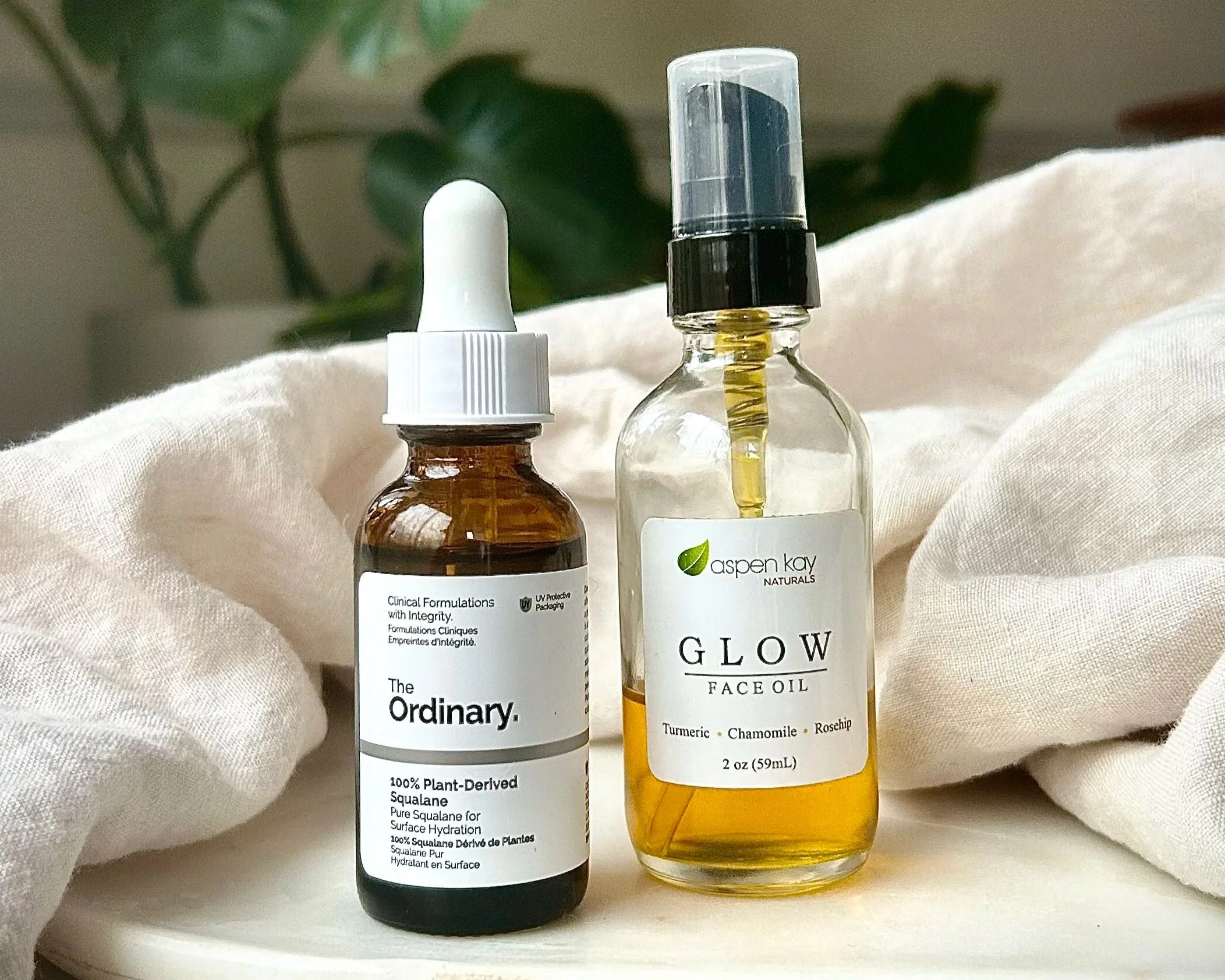
Personally, I tend to reach for lightweight oils that absorb quickly and don’t leave a heavy finish. Most often, I use the Aspen Kay Naturals Glow Face Oil. It’s simple, layers well at the end of a routine, and contains ingredients like rosehip and chamomile that support calm skin. I press a few drops into damp skin, and it feels soft and hydrated—not greasy. If you want to see how I pair it with cleanser and toner in a simple daily routine, you can read that here.
If your skin is very oily or you prefer something even more minimal, a simple squalane oil can be a good starting point. I’ve had good results with The Ordinary 100% Plant-Derived Squalane—it’s extremely lightweight, absorbs quickly, and feels less “oily” than many botanical blends.
Of course, these aren’t the only options, and not every oil will work for every skin type. But choosing something lightweight and starting slowly can make a noticeable difference. In my experience, balance almost always works better than extremes. Give your skin a couple of weeks to adjust, use a small amount, and let consistency do the work.
Oily skin doesn’t need to be stripped into submission. And skincare doesn’t need to be extreme to be effective. Simple adjustments, done consistently, often work better than constant changes.
Keep it simple.