
Blog
Simple Routines, thoughtful choices, and everyday life.
Nothing complicated. Just what actually helps.

When You’re So Overwhelmed you Just… Stop
Ever feel stuck staring at your to-do list, unable to start anything? This is the quieter side of overwhelm - and a simple, realistic way to move forward again.
There are days when I don’t feel overwhelmed in the way people usually describe it.
Nothing is falling apart. There’s no crisis. No big emotional spiral.
But… I can’t seem to do anything.
I’ll sit there knowing there are things I need to do. Respond to something, open the document I’ve been putting off, start the next task.
And I just don’t.
Not because I don’t care or I’m distracted. It’s more like something in me has stalled out.
I’ve had moments where I’m sitting at my desk, staring at my screen and a full list of things to do… and my brain just shuts down. I can see everything I need to do, but I can’t seem to start any of it. It’s like there’s a wall between me and the next step, and I don’t have the energy to push though it.
If you’ve ever felt like that too, you’re not broken. You’re probably just overwhelmed in a way that doesn’t look like overwhelm.
The Kind of Overwhelm That Doesn’t Look Like Much
From the outside, it probably doesn’t look like anything is wrong.
You’re at your desk. You’re technically working. You’re going through the motions. But internally, it feels heavier than that.
Like:
every task requires more energy than you have
even simple decisions feel slightly out of reach
you keep thinking “I’ll do it in a minute”. And the minute never comes.
You’re not choosing to ignore things. You’re just… stuck in place.
And the longer it lasts, the harder it feels to break.
Why This Happens (In a Normal, Human Way)
I used to think this meant I needed more discipline. But this doesn’t feel like a discipline problem.
It feels like overload.
Too many decisions. Too much input. Not enough space to recover in between.
At some point, your brain stops pushing forward and starts conserving energy instead. And when that happens, even basic things can feel harder to start than they should.
What I Do Instead (When I Catch It In Time)
I don’t try to force my way out of it anymore. That usually makes it worse.
What helps more is lowering the bar to something that doesn’t require momentum.
Not a full reset. Not a productive day. Just a small shift.
Something that looks like:
stepping outside for a few minutes, just to reset the feeling a little
putting on one upbeat song and doing anything while it plays
drinking something cold or warm and actually sitting with it for a minute
picking the easiest possible task and doing only that
It doesn’t fix everything. But it gets things moving just enough.
If this is the king of thing you’ve been feeling lately…
If You Only Do One Thing
If everything feels like too much, come back to this:
Pick one thing that feels almost too easy to count.
Not the most important task. Not the thing you’ve been avoiding. Just something small enough that your brain doesn’t push back on it.
And then don’t think past that. Don’t try to map out the rest of the day.
Just do the one thing.
Because when I’m in that state, it’s not really about getting everything done. It’s about getting unstuck.
And more often than not, once I start, it’s a little easier to keep going. Sometimes it’s just one more thing. Or it might turn into a few. But it’s usually enough to at least get me moving again.
The Part I Try to Remember
This feeling always passes.
Not because I suddenly become more motivated or disciplined, but because I eventually get enough space, rest, or simplicity for things to start moving again.
And when they do, it doesn’t take much. A little energy comes back. One thing gets done. Then another.
Nothing extreme. Just forward again.
A Different Way to Look at It
I don’t think this is something to fix. I think it’s something to notice. A signal that maybe you’ve been carrying more than you realized… even if it doesn’t look like much from the outside.
Maybe it’s just your body asking for a little more space, or a little more care, than it’s been getting.
And instead of pushing harder, sometimes the better response is to make things smaller. More doable. More forgiving. Until you feel like yourself again.
Maybe we weren’t stuck after all… just paused for a minute
If you’re going through a day where everything feels a little heavier than usual, you might also like this reset post — it’s what I come back to when I need to start fresh without overthinking it.

The 10-Minute Reset That Fixes Most Bad Days
Some days don’t fall apart — they just feel a little off. This simple 10-minute reset helps you feel more like yourself again without overhauling your whole day.
A simple way to reset your day when nothing feels quite right.
Some days don’t exactly fall apart… they just feel off. You wake up a little slower. You can’t quite focus. Everything feels slightly harder than it should. Not bad. Just… off.
I used to try to push through days like that. Power through. Deal with how I felt later.
And for a while, it actually did work. I could go all day on coffee, skip meals, get everything done, and feel pretty unstoppable.
But it doesn’t work the same anymore — now I feel it almost immediately.
So now do something different. I reset. Not my whole day. Not my entire to-do list. Just a few small things that usually take about ten minutes total. And most of the time, that’s enough to turn things around.
What a reset actually is (and what it’s not)
This isn’t a routine. It’s not a full clean, a workout, or a productivity system.
It’s just a quick shift out of that “off” feeling. Something that helps you feel a little more like yourself again.
My 10-minute reset (realistically)
This is what I come back to over and over:
1. Open a window or step outside
Fresh air helps more than I expected it to. Even a minute or two on the porch or a quick walk to the mailbox resets something.
Usually, it’s also when I’ve been sitting too long.
2. Drink something (not just coffee)
I almost always feel better after this.
Most mornings, I already have a pitcher of my simple hydration drink in the fridge, so I’ll pour a glass and actually finish it.
If you’ve read my hydration post, you know I keep it really simple. It’s a small thing, but it helps more than it should.
3. Tidy one surface
Not the whole house. Just one thing: the kitchen counter, my desk, the bathroom sink. It takes maybe two minutes, but it changes how the space feels.
4. Clean my face or tidy my hair
Not a full routine. Just enough to feel a little more put together.
It’s a small reset, but it makes a noticeable difference.
5. Change clothes (even if I don’t need to)
This is the one I resisted the longest. But it’s also the one that works really well. Even if I’m staying home and one sees me.
Getting dressed shifts my mindset immediately.
6. Put on an upbeat song
This works faster than anything else.
I’ll put on one song I know I like — something a little more upbeat than how I feel. Not a whole playlist. Just one.
It usually shifts my mood almost immediately, even if nothing else has changed yet.
Sometimes I’ll keep going and let a few songs play. Usually one is enough. Either way, it helps.
Why this works (without overthinking it)
I don’t think it’s about productivity. It’s about changing your state. When everything feels off, it’s usually not because something is wrong.
It’s because:
you’ve been sitting too long
you’re a little dehydrated
your environment feels cluttered
you don’t feel like yourself
Fix a few of those things, and the whole day starts to feel different.
If you only do one thing
If all of this feels like too much, start here:
Change your clothes… or put on one upbeat song you love.
Both take almost no effort, but they can shift how the rest of the day feels.
It fits into my day like this
I don’t do all of this on good days. I use it when I can’t focus, when I feel unmotivated, or when I catch myself scrolling instead of doing what I had planned.
Instead of trying to “get it together”, I just reset.
Some days I do this mid-morning. Sometimes after lunch. Sometimes around 3:00 when my energy drops.
It’s not scheduled. It’s just something I reach for when I need it.
And most of the time, it works.

Why I Get Ready in the Morning—Even When I’m Staying Home
I didn’t think getting ready mattered if I wasn’t going anywhere. But it ended up being one of the simplest ways to feel better, move more, and actually start my day.
A small habit that makes the whole day feel easier
I didn’t used to get ready if I wasn’t going anywhere. It felt unnecessary.
If I was home all day, I’d stay in whatever I slept in… maybe throw my hair up… maybe not. No one was going to see me, so what was the point?
And honestly, at first that felt kind of nice — like a break from having to get ready at all.
But before long, that started to wear off.
On the days I stayed like that — technically up and working, but not really in the day yet — everything felt a little off. I was slower, less motivated, just kind of… there.
So at some point, I started getting ready anyway. Not in a big way. Just enough.
It’s actually a small part of my morning routine, but it ended up being the piece that made the biggest difference.
I think part of it is that it flips a switch.
When I don’t get ready, the day feels optional. Like I’m easing into it… even hours later.
But when I do, it feels like I’ve actually started. And I move differently.
I’ll step outside for a bit, walk around the neighborhood on my break, or run a quick errand I’ve been putting off. Nothing structured — just more movement, more time outside, more life happening without me forcing it.
It also removes that low-level resistance I didn’t realize was there.
If I’m not ready, I avoid things. I won’t answer the door. I hesitate to step outside. Sometimes I’ll literally wait until the package has been dropped off before opening the door.
But when I’ve taken a few minutes to get myself together, those same things don’t feel like a big deal.
I’m not doing more because I’m trying harder. I’m doing more because I feel ready.
Often, getting ready just looks like cleaning my face, putting on something I’m okay being seen in, and tidying my hair. That’s it.
And if I don’t do it some days, that’s fine too. I still have those.
But this is one of those small things that helps more than it seems like it would. It doesn’t fix everything. It just makes the day easier to move through.
And honestly, that’s usually enough.
Anyway, that’s what’s been helping me lately. It’s not perfect, but it makes the day feel a little better.
Probably fine.

How To Wake Up Earlier Without Feeling Miserable
Waking up earlier might never feel amazing, but it doesn’t have to feel miserable. A few small changes can make mornings calmer, easier, and much more manageable.
Small changes that make early mornings feel calmer and much more manageable.

This post may contain affiliate links. If you choose to purchase through them, I may earn a small commission at no additional cost to you.
Waking up earlier might never feel amazing. For some people, mornings will always come a little too soon.
But there’s a big difference between waking up feeling miserable and waking up feeling… not the worst.
Most advice about early mornings makes it sound like a discipline problem — like you just need to force yourself out of bed and power through it. In reality, a few small changes can make waking up earlier feel much more manageable. And once you start to feel the benefits — calmer mornings, a little extra breathing room before the day begins — it becomes surprisingly doable.
Why Waking Up Earlier Feels So Hard
One of the biggest reasons waking up earlier feels so difficult is that we tend to change too much at once. We set an alarm an hour earlier than usual and expect our bodies to just go along with it.
But sleep doesn’t work that way. When you suddenly cut your sleep short or disrupt your normal rhythm, your body pushes back. You wake up feeling groggy, disoriented, and immediately tempted to hit snooze.
There’s also a mental side to it. When mornings start with stress — alarms going off, rushing out of bed, trying to force yourself into a new routine — your brain starts to associate early mornings with discomfort.
That’s why so many attempts to wake up earlier last a few days and then fall apart. The change is just too abrupt.
A gentler shift works much better. Instead of forcing a completely new schedule overnight, the goal is to make small adjustments that help mornings feel a little easier over time.
Don’t Try to Change Everything at Once
Instead of setting your alarm an hour earlier and hoping for the best, try shifting your wake-up time gradually. Even fifteen or twenty minutes earlier can make a noticeable difference without feeling overwhelming.
Give your body a week or two to adjust before changing it again. Small shifts are easier to stick with, and over time they add up to a routine that feels natural instead of forced.
One small habit that can help is avoiding the snooze button. When you fall back asleep for a few minutes at a time, your brain keeps trying to start another sleep cycle it never gets to finish. That can leave you feeling more groggy than if you had just gotten up the first time.
If you can, set your alarm for the time you actually want to get up and try to stand up when it goes off. It may not feel great at first, but it usually makes the rest of the morning much smoother.
Small changes may feel slow, but they work. Your body adjusts gradually, and mornings start to feel more manageable instead of overwhelming.
Make Mornings Easier the Night Before
If you want to wake up earlier without feeling miserable, the real work often starts the night before.
A calmer evening makes mornings easier.
Small choices can help your body wind down sleep more comfortably. For example, avoiding heavy meals right before bed can make a difference. Giving yourself two or three hours to digest helps your body settle more fully. It can also help to ease up on drinking liquids in the hour before bed so you’re less likely to wake up during the night.
A few simple habits can make the next morning feel smoother too. Laying out clothes, prepping coffee or tea, or deciding what your first few minutes will look like removes small decisions that feel bigger when you’re half awake.
Lighting can make a difference as well. If your alarm goes off while it’s still dark, flipping on a bright overhead light can feel harsh and disorienting. A small bedside lamp or a simple touch lamp can make the transition feel much more gradual.
If you’re working on building a more consistent wind-down routine, I’ve written more about the small habits that help signal to your body that it’s time to sleep in my evening routine post.
The goal isn’t to create a complicated nighttime routine. It’s just to make the transition from evening to morning a little easier.
Give Yourself a Reason to Wake Up
Waking up earlier is much easier when there’s something to look forward to.
If the first thing waiting for you is stress — rushing, checking emails, jumping straight into responsibilities — it makes sense that your brain resists getting out of bed.
But when mornings include something small and pleasant, the experience shifts.
Even a few quiet minutes with a cup of coffee or tea can make the day feel less rushed. Some people use that time to journal, stretch, read a few pages of a book, or simply sit quietly before everything begins.
It doesn’t have to be productive or impressive. The point is just to give yourself a moment that feels calm and intentional.
When mornings start this way, waking up earlier begins to feel less like a chore and more like a small gift you’re giving yourself.
I’ve written more about my own morning routine here.
What Real Progress Actually Looks Like
Waking up earlier rarely happens overnight. For most people, progress is gradual.
It might mean waking up twenty minutes earlier than you used to, or simply having a few mornings each week that feel calmer and less rushed. Some days will still be harder than others — especially when life gets busy or sleep doesn’t go as planned — and that’s normal.
The goal isn’t a perfect routine or suddenly becoming someone who loves early mornings. It’s just making small adjustments that help your mornings feel a little easier.
Over time, those small shifts can move waking up earlier from miserable to manageable — and once you begin to feel the extra calm before the day begins, it becomes much easier to keep going.
Here’s to mornings that feel a little calmer and a little less rushed.
— Probably Fine
Before you go…
If you enjoy thoughtful ideas about routines, wellness, and creating a calmer everyday life, you’re welcome to subscribe here. I share small habits and gentle adjustments that help life feel a little more manageable — no dramatic resets required.
The Probably Fine Philosophy: Life Doesn’t Need to Be Perfect to Feel Good
Life can start to feel like a constant list of things to fix - our routines, our homes, our habits, even ourselves. The Probably Fine Philosophy is a better way of moving through everyday life, letting go of the pressure to perfect everything and focusing instead on what actually helps.
If you’re new here, this post explains the philosophy behind everything I share on Probably Fine Living.
The Pressure We Carry
I’m still learning how to do this. How to build a life that feels calmer and more supportive instead of constantly rushed and behind.
Most days, life just feels full. There’s work, people depending on you, things around the house that never really stay done for long. Even when you’re trying your best, it can feel like you’re always a little behind where you thought you’d be.
For many of us, all of this is layered on top of a normal workday, which leaves very little room for much of anything else.
A lot of us are doing what we can with the time, money, and energy we have, and some days that simply feels like a stretch.
Then you open social media and see beautifully put-together homes, perfect routines, soft morning light — and women who somehow always look polished and effortless. The outfits, the hair, the sense that everything is just… working.
It’s hard not to compare. It can start to feel like everyone else has figured out systems or rhythms that somehow missed you.
I have to remind myself that what we’re seeing is just a snapshot. A moment someone chose to share because it looked nice. It isn’t their whole day, or the messy parts right outside the frame.
But when you’re already stretched thin, it’s easy to forget that and start measuring your real life against someone else’s highlight reel.
When Everything Starts to Feel Like Too Much
Sometimes it feels like I’m always trying to fix something about myself.
My personality. How I handle things. How I look. How well I’m taking care of my home and the people I love.
There’s this running list in the background of all the areas where I could be doing better — staying in touch more, keeping the house cleaner, making it feel prettier, finishing projects that have been sitting there for years.
And then there are the bigger things. The updates you wish you could make to your space — whether that’s renovating a home, decorating a small apartment, or just hoping to have a place of your own someday. Wanting your surroundings to feel more put together, but knowing it takes more time and money than you realistically have right now.
Even things that are supposed to be simple, like eating better or keeping a routine, can start to feel like just another category where you’re falling short.
When all of it piles up, it gets overwhelming fast.
And instead of feeling motivated, it’s easy to shut down and do nothing — not because you don’t care, but because you care so much that your brain doesn’t know where to start.
Letting Go of the Need to Fix Everything
I’ve had to remind myself that not everything needs fixing right now.
Life doesn’t have to feel like one long self-improvement project.
There will always be something that could be better. A habit to work on. A space to update. A version of yourself that seems just slightly out of reach.
Trying to chase all of it at once is exhausting.
I’m learning that rest doesn’t have to be earned by finishing every task. And enjoying your life doesn’t have to wait until everything is finally “done'“.
Some things can stay simple. Some seasons can move more slowly. Some parts of life are allowed to be imperfect without meaning you’ve failed.
Sometimes it’s enough to build days that feel manageable and supportive — even if they’re not impressive.
The Probably Fine Philosophy
I don’t have everything figured out, but I’ve been learning to approach life a little differently.
I think of it as the Probably Fine philosophy.
It’s a gentler way of moving through everyday life. Less pressure to perfect everything, more focus on what actually matters.
Life is lived in progress. Some days feel organized. Some don’t. Some parts of life move quickly, while others take longer to unfold.
Both are normal.
It’s just a reminder that life doesn’t have to look perfect to feel good.
What This Looks Like in Real Life
Part of what led me here was realizing I can’t pour everything into responsibilities while ignoring myself.
When I’m exhausted and running on empty, even the simple tasks start to feel like too much. I rush through them, resent them, and then dread doing them again the next day.
But when I make space to take care of myself — to feel a little steadier in my own body — I show up differently. I have more patience for the things I have to do. Sometimes even a little extra energy.
It doesn’t change my responsibilities, but it changes how I move through them.
Small shifts build on each other, and before I realize it, I’m not bracing myself all the time. The day feels calmer than it did before.
I’m still figuring this out as I go.
There are days I fall back into old habits of pressure and overthinking, days when everything feels urgent and unfinished.
But I keep coming back to the same reminder: life doesn’t have to be perfect to feel good.
Small shifts matter. A little more care. A little more patience. A little more room to breathe.
That’s enough to start changing the tone of a day.
This philosophy shows up in different ways across the site — through simple routines, thoughtful skincare, and small habits that help daily life feel calmer and more supportive over time. If you’d like to explore more, you can start with My Routine, browse the Beauty posts, or visit the Blog to see everything that’s been shared so far.
If any of this resonates, you’re in the right place.
Come sit with me.

A Simple Way to Stay Hydrated Without Sugary Sports Drinks
A fresh, natural hydration drink made with simple ingredients you likely already have at home.
Simple, real ingredients you can find in your kitchen — no artificial powders, just an easy habit that helps you sip consistently throughout the day.
This post may contain affiliate links. If you choose to purchase through them, I may earn a small commission at no additional cost to you.
Drinking enough water should be manageable, but it’s surprisingly easy to fall behind. I wanted a gentle uncomplicated way to stay hydrated without relying on sugary drinks or complicated powders. This basic hydration ritual has become one of those small daily habits that helps me feel a little more put together without much effort.
It’s easy, refreshing, and nothing fancy — but it works. Here’s what I use each morning:
What I Use
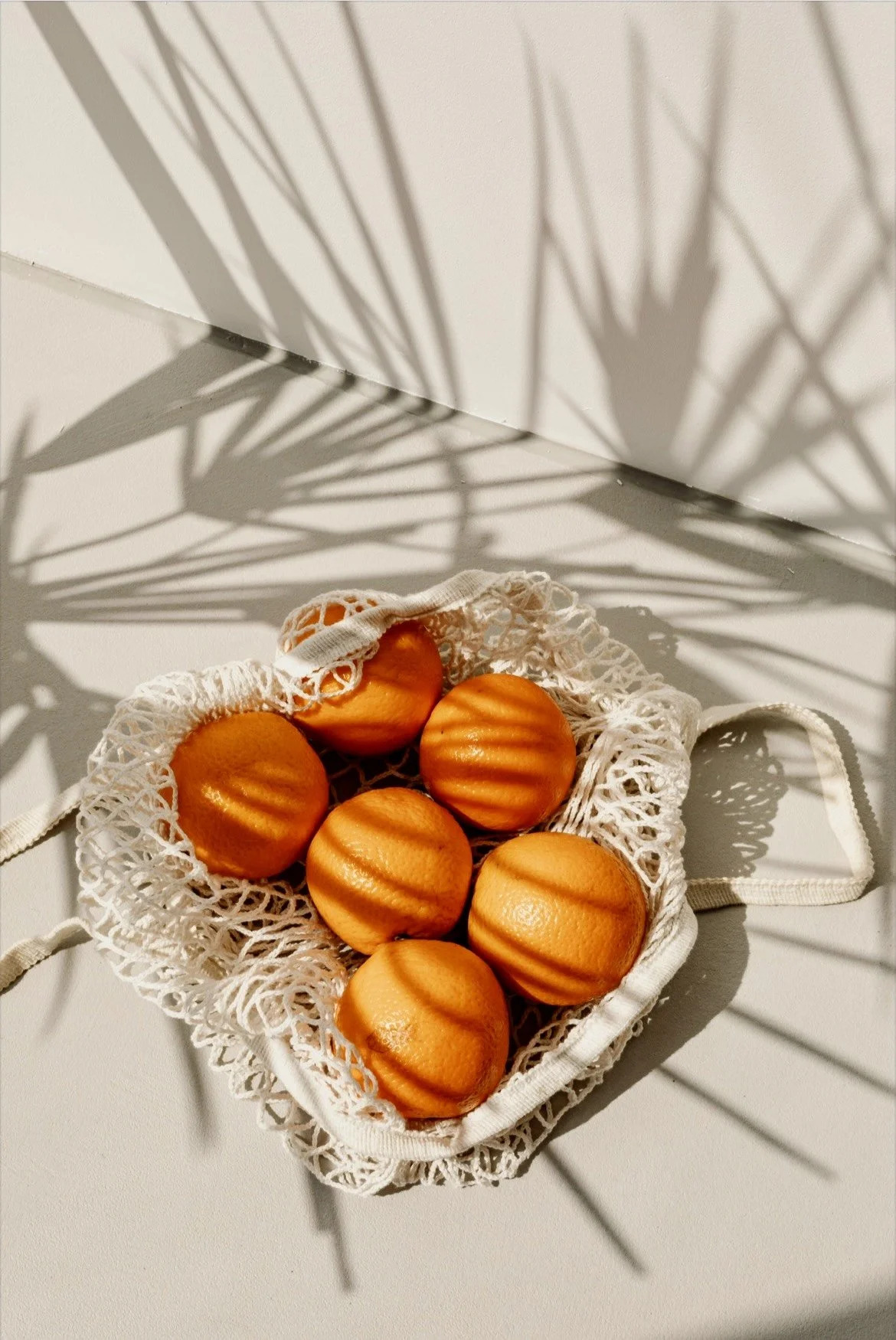
Juice from a fresh orange
A pinch of mineral salt (I use this one)
A small sprinkle of cream of tartar (for natural potassium)
Cold filtered water
Ice, if you like it extra cold
You don’t have to measure this perfectly — the goal is just a light citrus flavor with a subtle mineral taste that feels refreshing and easy to sip.
If You Prefer Exact Measurements
If you’re someone who prefers exact measurements, here’s the ratio I use for a large jar or carafe:
For a 64-ounce carafe:
Juice of 2 oranges
1/8 teaspoon mineral salt
1/8 teaspoon cream of tartar
Filtered water to fill
If you prefer a lighter citrus flavor, you can use 1 orange instead.
This ratio is gentle and mild — perfect for everyday hydration. If your activity level is higher or you’re sweating heavily, you may need slightly more electrolytes. Always listen to your body, and if you have a medical condition or specific health concerns, check with a healthcare professional.
Why These Simple Ingredients Work
Each ingredient plays a small but helpful role, supporting hydration in a gentle, natural way.

Fresh Orange Juice
Freshly squeezed orange juice provides natural vitamin C and plant compounds that begin to decline after juicing. Using fresh oranges gives you brighter flavor and more of the nutrients that support overall wellness.
Mineral Salt
A small amount of mineral salt provides trace minerals and sodium, which help your body maintain fluid balance and absorb water more effectively.
Cream of Tartar
Cream of tartar is a natural source of potassium, an essential electrolyte that works alongside sodium to support hydration and normal muscle function.
Together, they create a light, pleasant drink that feels easier to sip throughout the day than plain water alone.
Tools That Make It Easier
You don’t need anything fancy to make this drink — but a few practical tools can help the process feel easier (and nicer)
Citrus Juicer — makes squeezing fresh juice effortless
Pretty Pitcher — keeps your drink visible and inviting all day
Insulated Water Bottle or Glass Tumbler — for taking your hydration drink on the go
Wooden Spoon or Stirring Tool — for gentle mixing
Measuring Spoons — helpful if you like consistent ratios
How This Fits Into My Day
I usually make a full pitcher in the morning and keep a large glass on my desk, refilling it throughout the day while I work. Having it nearby makes it easy to consistently sip without thinking much about it.
The light citrus flavor makes it feel more lively than plain water — almost like a natural sports drink — so it never feels like a chore to finish.
When I stay consistent with it, I notice small but meaningful differences. My skin feels less dry, my hands don’t get as rough, and I tend to look a little less puffy in the mornings. Nothing dramatic — just subtle signs that I’m better hydrated.
It’s a simple habit, but it’s one of the simplest habits I’ve actually stuck with.
Why Doing Less Can Feel Better—In Beauty and in Life
Modern life subtly asks us to do more in every area — beauty routines, wardrobes, schedules, and expectations. But carrying less can make room for what truly matters. A thoughtful reflection on simplifying daily life without guilt.
A gentle approach to simplifying routines, wardrobes, and daily life
Lately, it feels like everything requires more effort than it used to. More steps, more products, more decisions, more things to keep up with. I didn’t fully notice how tired I was until even the small things started to feel heavy — getting dressed felt like a decision I didn’t want to make, my skincare routine turned into a checklist, and simple plans began to feel more like obligations. It’s not that we’re doing anything wrong. Modern life just asks us to carry more than we were ever meant to.
Maybe the goal isn’t to manage everything perfectly. Maybe it’s to stop assuming everything needs to be managed in the first place. To question the pressure to optimize every detail, and to consider that doing less might actually make room for what matters.
When Everything Starts to Feel Like Too Much
There’s a point where the mental tabs stay open longer than they should. You’re thinking about emails you haven’t answered while folding laundry, mentally rewriting your to-do list while trying to relax, and feeling a low hum of guilt when you rest because there’s always something else you could be doing. Nothing is necessarily wrong, but nothing feels truly settled either. It’s an overload that builds slowly, until even ordinary tasks start to feel heavier than they used to.
And even when you do get a moment to pause, your mind is already leaning into tomorrow. You’re anticipating the next responsibility, the next decision, the next thing that will need your energy. It doesn’t have to be something dramatic to feel heavy — just the steady awareness that more is coming. That constant looking ahead can make it hard to fully arrive in the present, as if you’re always bracing slightly for what’s next instead of resting in what’s here.
The Myth of “More Is Better”
Somewhere along the way, “more” became synonymous with “better”. More steps promised better results. More commitments suggested a fuller life. More options made us feel productive and informed. But the constant addition of things to manage — routines, products, plans, expectations — doesn’t always improve our lives the way we think it will. Often, it just leaves us stretched thinner, with less energy to enjoy the things that actually feel meaningful.
Doing Less In Beauty
Beauty is often where the pressure to do more shows up first. Longer routines promise better skin. New ingredients appear every week, each one claiming to be the missing piece. It’s easy to fall into the mindset that if something isn’t workng, the solution must be adding another product, another step, another layer. But skin doesn’t always respond well to constant adjustment. Sometimes it just needs consistency, patience, and fewer things to process.
I’ve noticed this in my own routines, too. the more products I tried to layer in, the harder it became to tell what was actually helping. Skincare started to feel less like care and more like maintenance — a rotating experiment instead of something steady and supportive. It turns out there’s a quiet kind of relief in choosing a few products that work and giving them time to do their job.
If you’ve ever felt tempted to switch everything the moment progress feels slow, I wrote more about that here. How to Know If Your Skincare Routine Is Actually Working—Before You Switch Again. Sometimes consistency does more for your skin than constant improvement ever could.
Doing less in beauty isn’t about neglect. It’s about letting your routine breathe. Fewer steps can mean less irritation, less decision fatigue, and more space to simply let your skin exist without being treated like a project.
Doing Less in Fashion
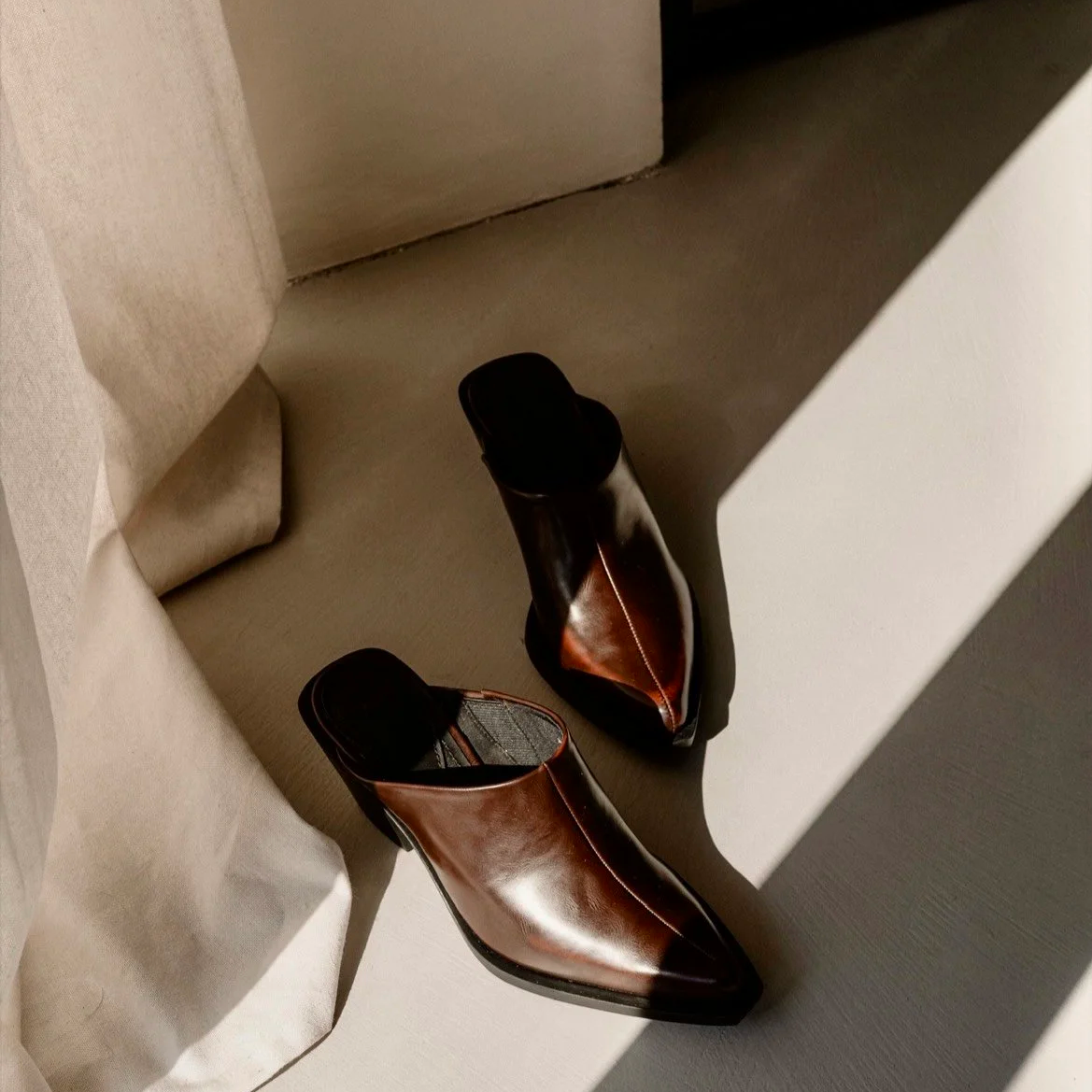
Fashion can sneakily become another source of pressure. Trends move quickly, styles change season to season, and it’s easy to feel like staying current requires constant updating. For me, it was tiring to keep up — not just financially, but mentally. Getting dressed became less about comfort or personal style and more about wondering if something still looked “right”.
Over time, I found myself reaching for the same familiar pieces anyway — the ones that felt comfortable, simple, and easy to wear without much thought. A few classic staples, neutral layers, and outfits that didn’t need constant adjusting make everyday life feel smoother. I also started paying more attention to what actually suited my body instead of what was trending. There are so many different body types, and feeling good in what you’re wearing matters more than keeping up with what’s new. When you feel comfortable and confident, that’s usually what people notice anyway — not the specific cut of your jeans or whether something is considered “in” this season. Repeating outfits is often far less exhausting than trying to keep up with trend cycles.
Doing Less in Daily Life
Beyond routines and wardrobes, the pressure to do more seeps into everyday life. Schedules fill quickly, notifications pile up, and even rest can start to feel like something that needs to be earned. It becomes easy to say yes out of habit — yes to staying busy — without noticing how little space is left to simply exist without obligation.
Doing less in daily life doesn’t mean you’ve stopped caring. It means you’re becoming more protective of your energy. It can look like declining an invitation when you’re already drained, letting a chore wait until tomorrow, or choosing a quiet evening over another commitment. Small decisions like these don’t make life smaller — they make it more sustainable.
There’s also a quiet relief in not constantly planning three steps ahead. When every moment is spent preparing for the next one, it’s hard to fully arrive where you are. Letting yourself handle what’s in front of you — instead of everything that might happen later — can make ordinary days fell less rushed and more manageable.
Sometimes, I’ve found it helps to give myself explicit permission. I’ll mentally say, You have permission to rest for the next hour, or You have permission to not think about that until tomorrow. It sounds simple, but naming that boundary makes it easier to set the mental weight down for a while. Worrying about what needs to happen tomorrow doesn’t actually change the outcome — it just pulls you out of the present moment. Giving myself permission helps me pause without guilt, knowing I’ll handle things when it’s time.
The Relief of Doing Less
There’s a subtle kind of relief that comes from no longer trying to optimize every corner of your life. When you stop adding more — more steps, more expectations, more pressure — things begin to feel calmer. Not empty, not unproductive, just lighter. You start moving through your days with a little more ease and a little less mental negotiation.
Doing less doesn’t mean lowering your standards or giving up on growth. It means recognizing that your energy is limited and choosing to spend it with more care. It’s simplifying routines so they support you instead of overwhelm you. It’s wearing what feels good, committing to what matters, and allowing yourself to rest without feeling like you’ve fallen behind.
When there’s less to manage, there’s more room to notice the small things — a slower morning, a comfortable outfit, a quiet evening that doesn’t need to be filled. Life doesn’t necessarily become perfect, but it can feel more manageable. More breathable. More your own.
Doing less isn’t about shrinking your life. It’s about making room for the parts that matter most — the relationships, the moments of rest, the small routines that gently support you. When everything is competing for your attention, the meaningful things can easily slip through the cracks. Choosing to carry less helps protect the space for what you actually want to hold onto.
Life feels lighter when you stop trying to hold it all.

How I Keep My Evenings Calm—Without a Complicated Routine
Evenings don’t need to be perfect. They just need to feel softer than the day that came before. This is the simple evening routine that helps me shift out of work mode and wind down at the end of the day.
Evenings don’t need to be perfect. They just need to feel softer than the day that came before.

This post may contain affiliate links, which means that I may earn a small commission at no extra cost to you.
The Hustle is Done
My evenings don’t begin calm.
Like most evening routines, mine usually begin with leftover momentum. The day is still humming — conversations replaying, tasks unfinished, mental tabs still open.
I don’t immediately change clothes or light a candle. What I change is my focus. I decide that the hustle is done.
There are still things to do. Dinner still needs to be made, laundry needs attention. But I’m not in performance mode anymore. I’m not responding. I’m not achieving.
I’m home.
That shift is subtle, but it changes everything.
Nourishment, Not Aesthetics
Dinner isn’t aesthetic here.
It’s not plated for a photo or elaborate unless I want it to be. It’s just good, nourishing food that I can sit down and enjoy with my family.
For me, calm doesn’t mean doing less. It means doing what I’m doing without rushing through it.
I try cleaning as I go — wiping counters while something simmers, loading a few dishes before we sit down — so that the aftermath doesn’t feel overwhelming. It’s not about perfection. It’s about preventing that heavy end-of-night pileup that makes everything worse the next morning.
And if you have help at home, this is the time to use it. Evenings shouldn’t fall on one person. It’s a good time for everyone to pitch in — clearing plates, wiping the table, resetting the kitchen together. Not in a rigid way. Just in a shared way.
Because this time matters.
Work is important, yes. But being home — eating together, talking, sitting in the same room — that’s the part of life that actually counts. I don’t want to rush through it just to get to the next thing. I want to be in it.
Something That’s Mine
After dinner and the kitchen reset — and whatever else the evening still needs from me — I try to spend a little time doing something that’s just for me.
Sometimes that’s watching a show with my family. Sometimes it’s reading. Sometimes it’s doing something productive — writing, planning, or working on something that moves my own life forward.
And when I can, I try to carve out even ten or twenty minutes for a little self-care. Nothing complicated. Just small things that help me feel better in my body and mind. Maybe a little stretching, a gua sha routine — which always seems to relax may face and jaw at the end of the day — or simply slowing down long enough to breathe.
It’s not about perfection or consistency. It’s just about creating a moment in the day that belongs to me.
Those small pockets of care add up more than you think.
Supporting My Future Self
Another thing that helps my evenings feel steadier is doing a few small things that make tomorrow easier.
I try to decide things the night before so they don’t add stress to the next morning — what time I’m waking up, what I’m wearing, what I’m going to eat. Sometimes even just mentally confirming the shape of the next day.
Nothing elaborate. Just enough planning that when the morning comes, the decisions are already made.
It’s an easy way of supporting my future self. Instead of waking up and immediately feeling behind, I wake up and carry out what I already decided.
That simple preparation makes the whole next day feel steadier.
Small routines like these add up over time.
Washing the Day Off
I don’t make my skincare complicated.
It’s not a 10-step routine, and it’s not always about glow. It’s about closure.
Washing my face at night feels symbolic in a way. The day doesn’t get to stay on me. The stress doesn’t get to sit there overnight.
Oil cleanser. Warm water. Moisturizer. Done.
In the morning, I try to set the tone. At night, I lower it.
(If you missed it, I wrote more about my morning routine here.)
Lowering the Volume
Overhead lights go off. Lamps come on.
Golden milk. Magnesium. A warm mug in a quieter house.
I make it a priority to get into bed early enough that I can actually get eight to nine hours of sleep. That part has become non-negotiable. Peaceful evenings mean nothing if I wake up depleted.
If I’m not fully sleepy yet, I don’t scroll. I turn the lights out and listen to an audiobook on Audible. Just listening — not watching, not reacting — relaxes me enough that eventually I reach over, turn it off, and fall asleep.
No drama. No grand routine.
Just lowering the volume.
Slightly Chaotic, But Recovering
My evenings aren’t perfectly cozy from the start.
They’re still slightly chaotic.
But they’re recovering.
And part of that recovery is remembering what matters most. The hours at home are the real ones — the ones that shape your life quietly, the ones you don’t get back.
So I try not to rush through them.
I don’t try to fix the whole day once the sun goes down. I just move it gently toward something softer — something dimmer, quieter, more intentional.
Even when the day wasn’t calm, the ending can be.
One day at a time.
A Simple Morning Routine for When You Feel Scattered
Not a 5AM overhaul. Just a soft, simple morning rhythm that keeps the day from slipping away.
I don’t wake up at 5 a.m.
I don’t journal for an hour.
I don’t try to reinvent myself before work.
What I do instead is protect my sleep, drink something warm, let light hit my face, and get myself ready — even if no one is going to see me.
At 43, I’ve realized I don’t need a perfect morning. I just need one that helps me feel like myself.
It’s not impressive or extreme. But it’s the difference between feeling steady and feeling slightly off all day.
Over time, I’ve realized that when my mornings feel rushed or chaotic, I carry that feeling with me all day. I feel a little more exhausted. A little more grumpy. A little less like the person I want to be.
So I built a morning rhythm that’s soft, simple, and just structured enough to help me feel like myself before the day really starts.
Start With Rest
The first part of my rhythm isn’t glamorous: it’s sleep.
I’ve had so many nights where I stay up too late and feel it the next morning — and it always reminds me how much this matters.
The exact time I wake up matters less than how rested I feel. Everyone’s schedule is different, but I try to get eight to nine hours whenever I can. And if I need to wake up earlier than usual — I have to plan for it — which generally means going to bed earlier too.
When I’m rested, everything feels easier. I’m more patient. More present. The morning doesn’t feel like it slips away from me. I just feel more like myself.
So I let sleep be the foundation. Everything else builds from there.
If you need a little help winding down and preparing for sleep in the evenings, I’ve written about my calm nighttime routine here.
Let the Morning In

When I wake up, I try not to let the day start without me. I pour a warm cup of water to rehydrate — usually with lemon and a little sea salt — and stand near a window.
I close my eyes for a few minutes and let the light hit my face. If the weather cooperates, I’ll step outside. Most days I just stand there quietly, still waking up, holding a warm mug in my hands.
It sounds small, but that light changes something. It helps my body wake up naturally. I’ve learned that morning light is one of the simplest ways to reset your internal clock, and I can feel the difference on the days I skip it.
Keep the First Moments Quiet
One thing that changed my mornings was not reaching for my phone right away.
I don’t check social media. I don’t scroll. I don’t open emails unless I absolutely have to. Even just a few notifications can shift my mood before I’ve had a chance to decide what it even is.
If I see an email first thing, my stress spikes. I feel like I have to jump to life immediately — to respond, to fix, to handle something. And suddenly the quiet start I wanted is gone.
So I give myself a little space first. A few minutes that belong to me before I start responding to the day.
It’s a small boundary, but it helps the morning feel like it’s mine — at my own pace — instead of something that’s demanding attention from me.
Get Ready Anyway
Even though I work from home, I still get ready for the day.
No one is coming over. Some days, no one will see me at all. But I shower, put on real clothes, fix my hair, and do a little makeup. Nothing elaborate — just enough to feel put together.
Especially working from home, it’s easy to let the lines blur — to stay in something comfortable and never fully shift into the day.
When I skip this step, I feel it. I’m a little more sluggish. A little less focused. Like I’m just drifting through instead of showing up.
But when I take a few moments to get ready, things shift.
I’m more likely to step outside and walk around the neighborhood on my break. I’ll run a quick errand that’s been sitting in the back of my mind. I’ll answer the door without thinking twice — whether it’s a delivery or a neighbor stopping by.
It’s not just about how I look. It’s about how I move though the day.
It takes 10 minutes. But it changes the way I carry myself — and how the rest of the day unfolds. It just makes me fell a little more like a person again.
A Small Ritual
After I’m ready, I make coffee.
I drink decaf now, but I still love the ritual of it. There’s something emotional about a warm mug in the morning. The smell, the first sip, the quiet few minutes before the day really starts.
I add a little sea salt and cream, stevia, sometimes gelatin. It’s not about caffeine anymore. It’s just a small ritual that signals: we’re up, we’re here, we’re starting.
Carry It With You
I’ve noticed that when my morning feels steady, the rest of the day follows that lead.
I’m more likely to clean up the kitchen instead of letting it pile up. I’ll run a quick errand on my break instead of putting it off. I’ll do a short reset — a quick tidy or small task — instead of collapsing into the couch feeling behind.
It’s not that I suddenly have more hours. I just have more capacity. And over time, those kinds of mornings start to shape everything else.
It’s not dramatic. It’s not impressive. It’s just a way of starting the day that feels the way I want it to.
A morning I actually get to have.
How To Know If Your Skincare Routine Is Actually Working—Before You Switch It Again
Results don’t show up overnight. Here’s how to give your skincare routine a fair chance — and how to tell if it’s truly working.

You start a new skincare routine convinced this might finally be the one. You wash your face, apply everything carefully, and look in the mirror the next morning expecting to see something amazing — brighter skin, smoother texture, some small sign that it’s working. By day three, you’re checking in different lighting. By the end of the week, you’re wondering if you should switch again. You start analyzing your skin like you’re studying for an exam.
The truth is, most skincare works on a slower timeline than we’d like. Our skin renews itself gradually, usually over the course of four to six weeks, which means a few days simply isn’t enough time. Subtle improvements are often the first signs that something is working — less redness, fewer new breakouts, skin that feels a little more balanced. It’s easy to miss those changes when you’re looking for something dramatic.
If you really want to know whether a routine is working, you have to give it a fair trial. For most products, that means staying consistent for at least four to six weeks before making a decision. Changing things too quickly makes it impossible to see what’s helping and what isn’t. When you let a routine settle, you give your skin time to respond — and you give yourself a better sense of what’s actually happening.
If you’re still figuring out what belongs in your routine to begin with, I share how I approach that decision here.
The Adjustment Period
If you’re using active ingredients like retinol, exfoliating acids, or certain acne treatments, you may notice an initial increase in breakouts. This is sometimes called “purging” and it can happen as those ingredients speed up skin turnover and bring underlying congestion to the surface. It can feel discouraging — especially when you were hoping to finally see improvement.
Purging usually appears in areas where you already tend to break out and typically settles within a few weeks. It’s part of the adjustment process for some people — not necessarily a sign that your routine is failing.
During this time, it can help to keep everything else simple. Avoid adding more new products, resist the urge to over-exfoliate, and focus on gentle cleansing and consistent moisturizing. Giving your skin steady support while it adjusts often makes the process feel much more manageable.
How to Evaluate Your Routine Clearly
Instead of looking for immediate improvement, try asking better questions.
Am I experiencing fewer flareups than before?
Does my skin feel comfortable throughout the day?
Am I constantly trying to fix something — or has that urge settled down?
It can help to compare your skin to how it felt before you started, not to the version you imagined after watching a perfectly lit skincare video. The goal isn’t perfection. It’s progress. And progress is often easier to see when you step back instead of scrutinizing every detail.
When It’s Not Working — And You Should Stop
Patience is important, but it’s not the same as ignoring clear signs that something isn’t right.
If your skin feels persistently irritated, tight, or uncomfortable, that’s worth paying attention to. Breakouts that steadily worsen instead of settling down, stinging that lasts beyond the first few applications, or redness that doesn’t calm over time are all signals that a product may not be a good fit for you.
There’s a difference between giving something a fair chance and pushing through obvious irritation. Skincare should support your skin, not feel like something you have to endure. If your routine feels like it’s making things worse instead of better, it may be time to simplify or remove one product and let your skin reset.
Skincare doesn’t usually announce itself with obvious change. More often, it shifts slowly — a little less irritation, a little more balance, a little more steadiness than before. It can be hard to trust that kind of progress when we’re used to expecting transformative results.
When you give your routine time, observe it honestly, and adjust only when something isn’t truly working, you start to understand your skin instead of constantly reacting to it.
Waiting may feel uncomfortable, especially when you want visible change. But sometimes the most effective routines are the ones you almost forget about — the ones that quietly do their job while you move on with your day. You’re not behind. You’re just in the middle of the process.
If you’re thinking about starting over completely… maybe don’t.
How To Choose Skincare Products—Without Getting Overwhelmed
Choosing skincare doesn’t have to feel overwhelming. Here’s a simple, steady way to decide what belongs in your routine — and what doesn’t.
There was a time when choosing a skincare product for myself felt equal parts overwhelming and exhilarating. Every label promised something different — brighter, smoother, firmer, clearer skin. Standing in the aisle or scrolling online, I’d feel a surge of optimistic hope that this one would finally be the thing that changed everything. I think, deep down, I believed that if I found the right product, my skin would somehow look flawless — like I’d stepped out of a magazine. That’s the goal, right?
But that excitement didn’t translate into reality. Even after bringing something home, I often felt unsure — still scanning the ingredient list, still wondering if I had missed something better. Eventually, I realized the problem wasn’t that I hadn’t found the perfect product. It was that I didn’t have a clear way of deciding in the first place. I was reacting to promises instead of asking whether a product actually fit into the simple routine I was trying to build.
Once I understood that, choosing skincare became much less emotional. I stopped looking for something that would transform my skin overnight and started looking for products that supported what I was already doing. Instead of asking, “Will this fix everything?” I started asking clearer questions.
I Ask Myself a Few Simple Questions
Now, before I add anything new to my routine, I pause and ask myself a few simple questions.
First, does this product support the foundation I already have? At it's core, my routine is built around a gentle cleanser, a simple moisturizer, and sunscreen. I explain that approach in more detail here. Anything new should fit into that structure without disrupting it. If it complicates things or overlaps unnecessarily, I usually don’t need it.
Second, are the ingredients straightforward and purposeful? I don’t expect perfection, and I’m not looking for the “cleanest” label possible. But I do look for formulas that feel deliberate — without excessive fragrance or long lists of unnecessary additions. Over time, I’ve learned that simpler formulas often work just as well, if not better, than products designed to do everything at once.
And finally, I ask myself: Am I interested in this because I need it, or because it sounds exciting? I’ve bought products simply because I loved the packaging, the name, or the feeling the brand created. Sometimes it was popular. Sometimes the models looked effortless and glowing, and I thought maybe I would too. There’s nothing wrong with appreciating good branding — it’s meant to draw us in. But I’ve found that my skin responds best when I’m steady, not reactive.
From Searching to Supporting
Gradually, this way of choosing has made skincare feel lighter. I’m not scanning shelves for the next breakthrough or wondering if I’m one product away from better skin. I’m simply looking for things that support what’s already working.
In a small way, it’s changed more than just my routine. Paying attention to ingredients instead of promises, to consistency instead of excitement, has made my whole process steadier. More intentional. Less reactive.
I’ve started to notice that the same principal applies elsewhere in life. It’s easy to be drawn in by what looks beautiful or sounds transformative. But usually, what lasts is simpler — steady habits, thoughtful choices, and things built on substance rather than shine.
Choosing skincare doesn’t feel like chasing anymore. It feels like caring. And that shift — from searching for what’s flawless to supporting what’s already there — has been enough.
And speaking of enough, that’s enough for now.

How To Start a Simple Skincare Routine That Actually Works
A calm, simple approach to skincare that focuses on supporting your skin, not constantly trying to change it.
If I’m being honest, I didn’t simplify my skincare routine because I had a sudden realization about ingredients or skin barriers. It mostly stemmed from choice fatigue and a low budget.
For years, I tried different products—sometimes splurging—but always searching for the right combination that would somehow change everything. A new serum. A different moisturizer. Something that promised brighter, clearer, smoother skin.
Sometimes things helped. Sometimes they didn’t. There was quite a bit of disappointment.
Eventually, I stopped trying so hard. I used fewer products simply because it was easier. And surprisingly, that’s when my skin started to look and feel its best. Not perfect. Just calmer. More balanced. Probably fine.
You Do Not Need a 10-Step Routine
Marketing leads us to believe that more products mean better results. When one thing isn’t working, the natural instinct is to add something else. A new treatment. A different serum. Something stronger. But skin doesn’t always respond well to being constantly adjusted. In many cases, too many products can overwhelm it, leading to irritation, dryness, or breakouts that weren’t there before.
Skin tends to do best with consistency and gentle support. When you use fewer products, it becomes easier to see what’s actually helping and what isn’t. Your skin has space to regulate itself without constantly reacting to something new. And your routine becomes easier to maintain, which matters more than any individual product ever will.
A simple routine isn’t a compromise. It’s often the point where things finally start to work.
I Choose Products Based on Ingredients, Not Marketing
At some point, I stopped paying attention to what products promised and started paying attention to what they contained.
Packaging can be beautiful. Words like brightening, renewing, and repairing sound reassuring. But I’ve learned that simple formulas with fewer, more familiar ingredients often work just as well—sometimes better—than products designed to do everything at once.
When I’m considering something new, I usually look it up in the Environmental Working Group’s (EWG) Skin Deep database. It gives products a safety rating based on their ingredients, which helps me better understand what I’m putting on my skin. It doesn’t mean everything has to be perfect, and I don’t treat it like a strict rule. It’s just a tool that helps me choose more intentionally.
Over time, this naturally led me toward simpler products. Fewer ingredients. Less fragrance. Nothing unnecessary. And without trying to overhaul my routine all at once, it slowly became calmer. Easier to maintain. Easier to trust.
Start With Just Three Products
At its core, a skincare routine only needs to do a few things.
Clean your skin.
Support it.
Protect it.
Everything else is optional.
For me, it helped to realize that the skin on my face isn’t fundamentally different from the skin on the rest of my body. The skin on my arms and shoulders isn’t perfect, but it’s healthy. I don’t layer multiple products on it or constantly try to change it. I keep it clean. I moisturize it when it’s dry. I protect it from the sun and elements. And then I leave it alone.
My face appreciates the same kind of care.
A gentle cleanser removes buildup from the day without stripping the skin. A simple moisturizer helps maintain balance and prevents dehydration. And sunscreen, worn during the day, protects your skin from long-term damage that isn’t always visible right away.
That’s enough to create a stable foundation. Once those basics are in place, your skin has the support it needs to function normally—without being pushed, corrected, or constantly adjusted. Everything else can come later, if you decide you need it.
If you’d like to see exactly how I structure my own simple routine, I break it down in detail in my 3-Step Skincare Routine here.
A Simple Routine Looks Like This
Morning:
Gentle Cleanser (if needed)
Moisturizer
Sunscreen
Evening:
Gentle cleanser
Moisturizer
That’s it.
If you’re curious about the exact products I’m currently using, you can see my full routine here.
You Can Always Add More Later—But You Don’t Have To
There is nothing wrong with trying new products or adding something specific if your skin needs it. But those additions should come from a place of intention, not pressure.
A simple routine gives you a stable starting point. It allows you to understand your skin instead of constantly reacting to it. And it removes the subtle feeling that you’re always one product away from fixing something.
For me, simplifying didn’t happen all at once. It happened gradually, mostly by doing less.
Everyone’s skin is different, and this is simply what has worked for me.
In the end, less turned out to be enough.
—Probably Fine Living
How To Oil Cleanse—Even If You Have Oily Skin
Oil cleansing might sound counterintuitive, especially for oily skin. Here’s how it works - and why it can leave skin clean without feeling stripped.

This post contains affiliate links. If you choose to purchase through them, I may earn a small commission at no additional cost to you. I only share products I genuinely use and love.
When I was younger, my skin was much oilier than it is now. By midday, my forehead would shine no matter what I used, so the idea of putting oil on my face felt completely wrong.
But at some point, I heard a simple truth: oil dissolves oil. Instead of trying to scrub everything away, the idea was to gently dissolve buildup with something that could actually break it down. That made enough sense that I decided to try it.
What surprised me wasn’t just how well it removed makeup and sunscreen. It was how clean my skin felt without that tight, over-cleansed feeling afterward.
Why Oil Cleansing Works
The logic behind oil cleansing is surprisingly straightforward. Makeup, sunscreen, and even the oil your skin produces are all oil-based. Using oil helps break down those layers without aggressively stripping the surface.
Instead of foaming and removing everything, oil works more gently. It loosens what doesn’t belong there, while leaving your skin barrier intact. That’s why it can feel clean without being tight.
How I Oil Cleanse (The Simple Way)
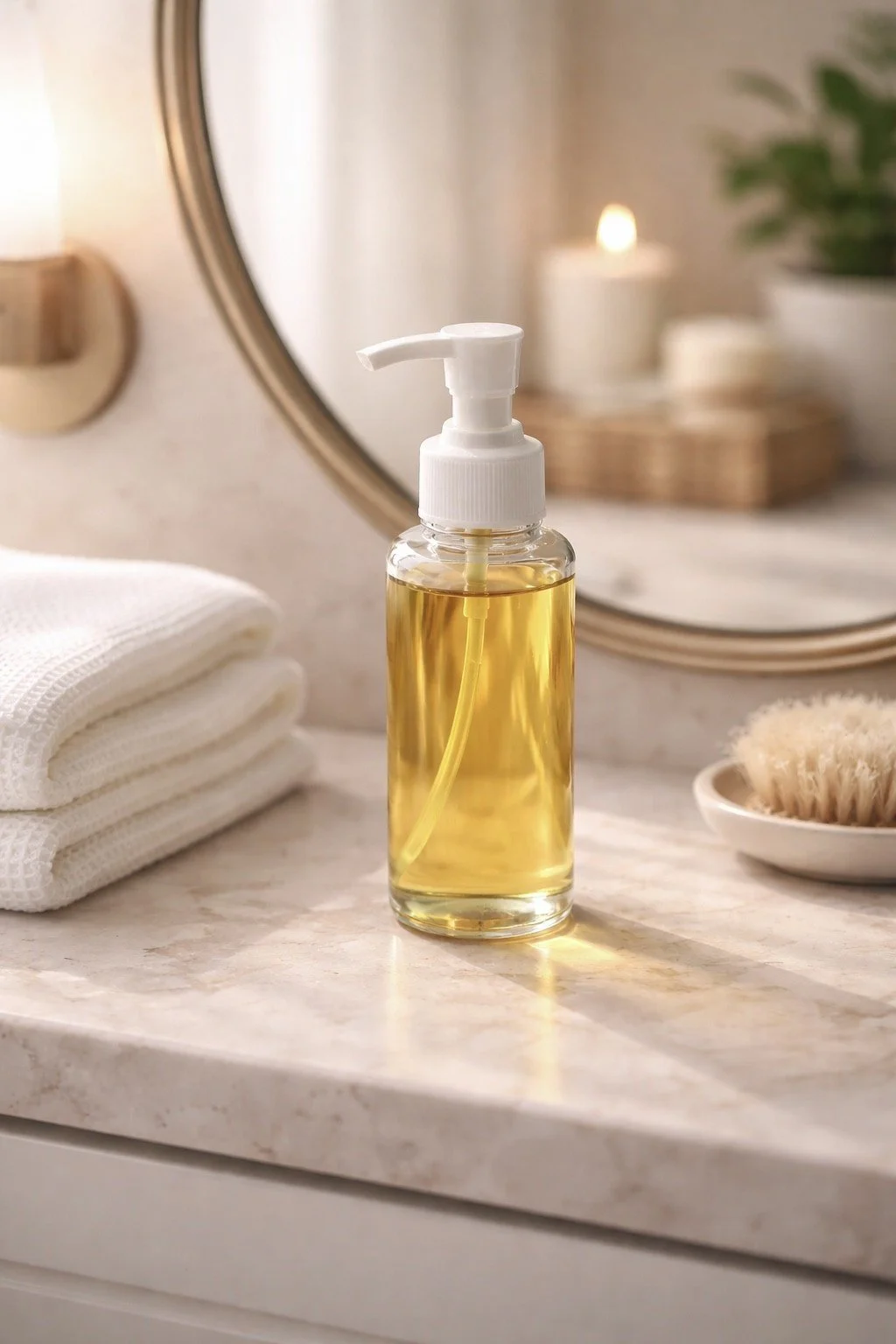
I keep it very low-effort. I start with dry skin and dry hands. I apply a small amount of oil and gently massage it into my face for about 30 seconds.
Next, I take a very warm (not scalding) damp washcloth and press it over my entire face for a few seconds. The warmth helps to loosen everything and makes it easier to remove the oil. Then I gently wipe it away, paying a little extra attention to areas that tend to get oilier, like my forehead and nose.
My skin feels clean afterward—not tight—with just a light softness left behind. If anything feels greasy, it’s usually because too much product was used or it wasn’t fully removed.
The Oil You Use Matters
When I first started oil cleansing, I used plain coconut oil. It was something I already had in the kitchen, and it made testing the idea very easy. Since coconut oil is solid at room temperature, I would warm a small amount between my palms until it melted, then follow the same steps described above. For me, it worked well. My skin felt clean, soft, and balanced.
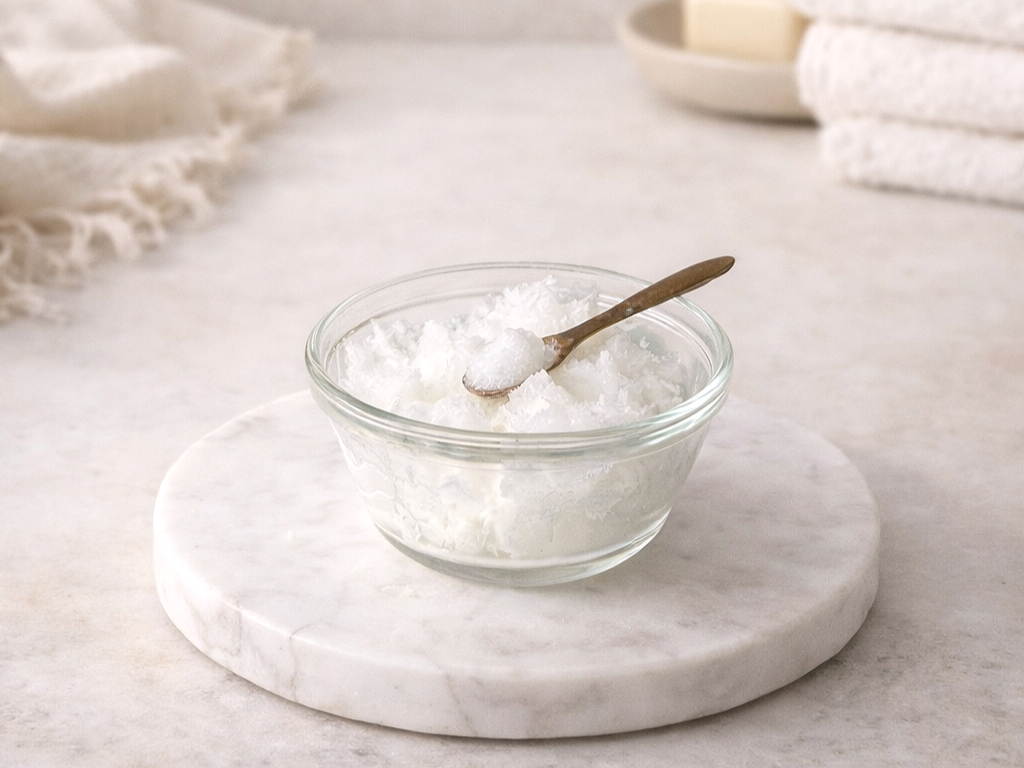
One reason I tend to stick with basic oils is that I prefer minimal ingredient lists. I don’t gravitate toward heavily fragranced products or formulas packed with unnecessary extras. For my skin, simpler usually works better. Another benefit of starting easy is that if you try it and don’t love it, you can always use the rest for stir-frying. Not many skincare experiments come with that option.
Coconut oil isn’t for everyone though. Some skin types—especially very acne-prone skin—may find it too heavy.
If you prefer something lighter or more specifically formulated for the face, a cleansing oil like the DHC Deep Cleansing Oil is another option. It’s designed to rinse cleanly and feel less heavy than straight kitchen oils, which can make it a good fit for oilier or combination skin.
The goal isn’t to use the richest oil available, but to use just enough to dissolve buildup gently—without leaving your skin feeling stripped.
When Oil Cleansing Might Not Be The Best Fit
Oil cleansing works well for many people, but it isn’t automatically right for everyone.
If your skin is severely acne-prone, actively inflamed, or under prescription treatment, it’s worth being cautious. Adding oil—even temporarily—may not be appropriate without professional guidance.
It’s also important to remove the oil thoroughly. Leaving heavy residue behind can lead to congestion, especially if your skin already struggles with clogged pores.
As with most skincare, the key is paying attention to how your skin responds. If it feels balanced and calm, you’re likely on the right track. If it feels heavy, irritated, or more congested, it may not be the best method for you.
Clean doesn’t have to mean tight. And balanced doesn’t have to mean complicated. Sometimes it’s just about using the right amount—and then letting your skin be.
Pantry optional.
Why Face Oil Isn’t Just For Dry Skin—It Might Help Oily Skin Too
Face oil isn’t just for dry skin. A lightweight oil can support the skin barrier and help restore balance - even for oily or combination skin.
This post contains affiliate links. If you choose to purchase through them, I may earn a small commission at no additional cost to you. I only share products I genuinely use and love.
Face oil has often been treated like the enemy of oily skin.
If your skin already feels shiny by midday, the last thing you want is something that promises “more glow”. Most of us have been taught that oil leads to clogged pores, breakouts, and more shine—so we reach for stronger cleansers and lighter moisturizers instead.
But the relationship between oil and oily skin isn’t that simple. In many cases, stripping the skin can actually make oiliness worse. And in the right form, a lightweight face oil can help restore balance instead of disrupting it.
The Common Myth
The belief that “oil causes oily skin” sounds logical. On the surface, it makes sense—if oil is visible, removing it feels like the obvious solution. But this idea confuses two different things: surface oil and skin balance.
For years, skincare advice for oily skin focused almost entirely on removing oil. “Oil-free” became the gold standard, and matte skin was the goal. The more a product promised to control shine or dry things out, the more convincing it sounded. It’s only more recently that balance and barrier health have become part of the conversation.
What Actually Causes Oily Skin
Oily skin isn’t just about having “too much oil”. It’s usually about imbalance.
Your skin naturally produces sebum to protect and moisturize itself. That oil is part of a healthy skin barrier. But when the barrier is disrupted—from harsh cleansers, over-exfoliating, or skipping moisture—the skin often responds by producing even more oil to compensate.
In other words, sometimes oily skin isn’t oily because it has too much oil. It’s oily because it’s trying to protect itself.
Dehydration can also play a role. Skin can be both oily and dehydrated at the same time. When water levels are low but oil production is high, the surface can look shiny while still feeling tight underneath. That’s when stronger cleansers and “oil-free everything” can make things worse instead of better.
Hormones, stress, climate, and genetics all matter too. But one of the most common patterns is this cycle: Strip the skin → skin overproduces oil → strip it again → repeat.
A gentle, balanced routine works differently. Instead of fighting oil, it focuses on supporting the barrier so the skin doesn’t feel the need to overcorrect.
How a Lightweight Face Oil Can Help (Without Feeling Greasy)
When most people think of face oil, they picture something heavy and shiny that sits on top of the skin. But not all oils behave the same way.
Lightweight oils absorb quickly and are often rich in fatty acids that support the skin barrier. When used correctly, they don’t “add more oil” in the way people fear. Instead, they help seal in hydration—think of it as the final layer that keeps moisture from evaporating too quickly—while signaling to the skin that it doesn’t need to overproduce sebum to protect itself.
The key is using the right amount and applying it at the right time. For oily or combination skin, a few drops are enough. Pressed gently into damp skin as the final step of a routine, a lightweight oil can lock in moisture without leaving a heavy residue. It should feel soft and balanced—not slick.
If it feels greasy, it’s usually one of three things:
Too much product
Applied on completely dry skin
Or an oil that’s too heavy for your skin type
Used thoughtfully, face oil isn’t about creating shine. It’s about restoring balance—especially for skin that’s been caught in the strip-and-overcorrect cycle.
Who Should (and Shouldn’t) Use a Face Oil
Face oil can work well for many skin types, but it isn’t necessarily for everyone.
It’s often helpful for:
Oily or combination skin that feels stripped or dehydrated
Skin that looks shiny but still feels tight
Anyone trying to support their skin barrier with a simple routine
Those living in dry climates or using drying active ingredients
When used in small amounts and layered properly, a lightweight oil can help maintain balance without clogging pores. That said, it’s not always the right choice. If your skin is severely acne-prone, inflamed, or under prescription treatment, adding an oil may not be appropriate without professional guidance. And heavier oils can feel suffocating on already congested skin. Patch testing and starting slowly are always wise.
Face oil isn’t a requirement. It’s a tool. And like most skincare tools, it works best when used intentionally.
The Face Oils I Use And Why
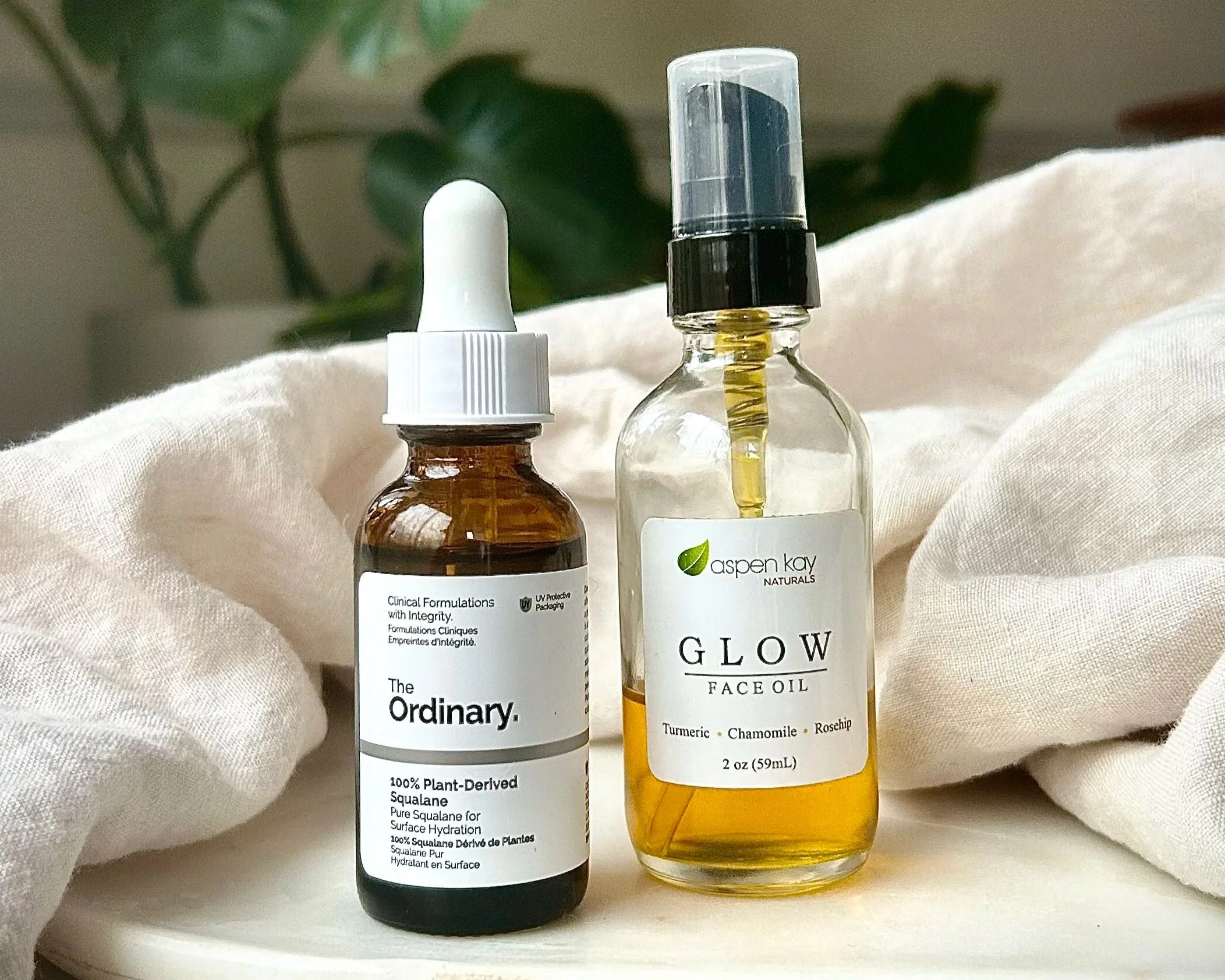
Personally, I tend to reach for lightweight oils that absorb quickly and don’t leave a heavy finish. Most often, I use the Aspen Kay Naturals Glow Face Oil. It’s simple, layers well at the end of a routine, and contains ingredients like rosehip and chamomile that support calm skin. I press a few drops into damp skin, and it feels soft and hydrated—not greasy. If you want to see how I pair it with cleanser and toner in a simple daily routine, you can read that here.
If your skin is very oily or you prefer something even more minimal, a simple squalane oil can be a good starting point. I’ve had good results with The Ordinary 100% Plant-Derived Squalane—it’s extremely lightweight, absorbs quickly, and feels less “oily” than many botanical blends.
Of course, these aren’t the only options, and not every oil will work for every skin type. But choosing something lightweight and starting slowly can make a noticeable difference. In my experience, balance almost always works better than extremes. Give your skin a couple of weeks to adjust, use a small amount, and let consistency do the work.
Oily skin doesn’t need to be stripped into submission. And skincare doesn’t need to be extreme to be effective. Simple adjustments, done consistently, often work better than constant changes.
Keep it simple.
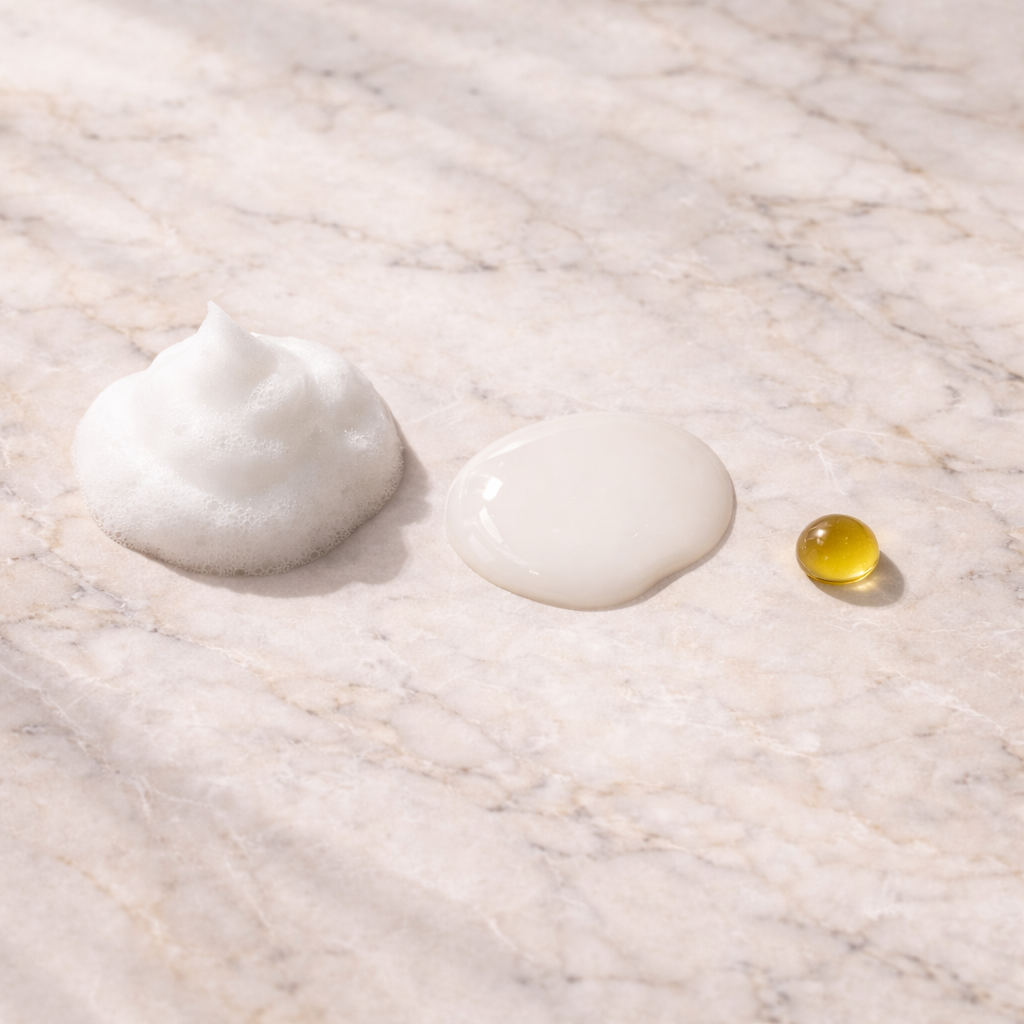
The 3 Skincare Products I Use Every Single Day
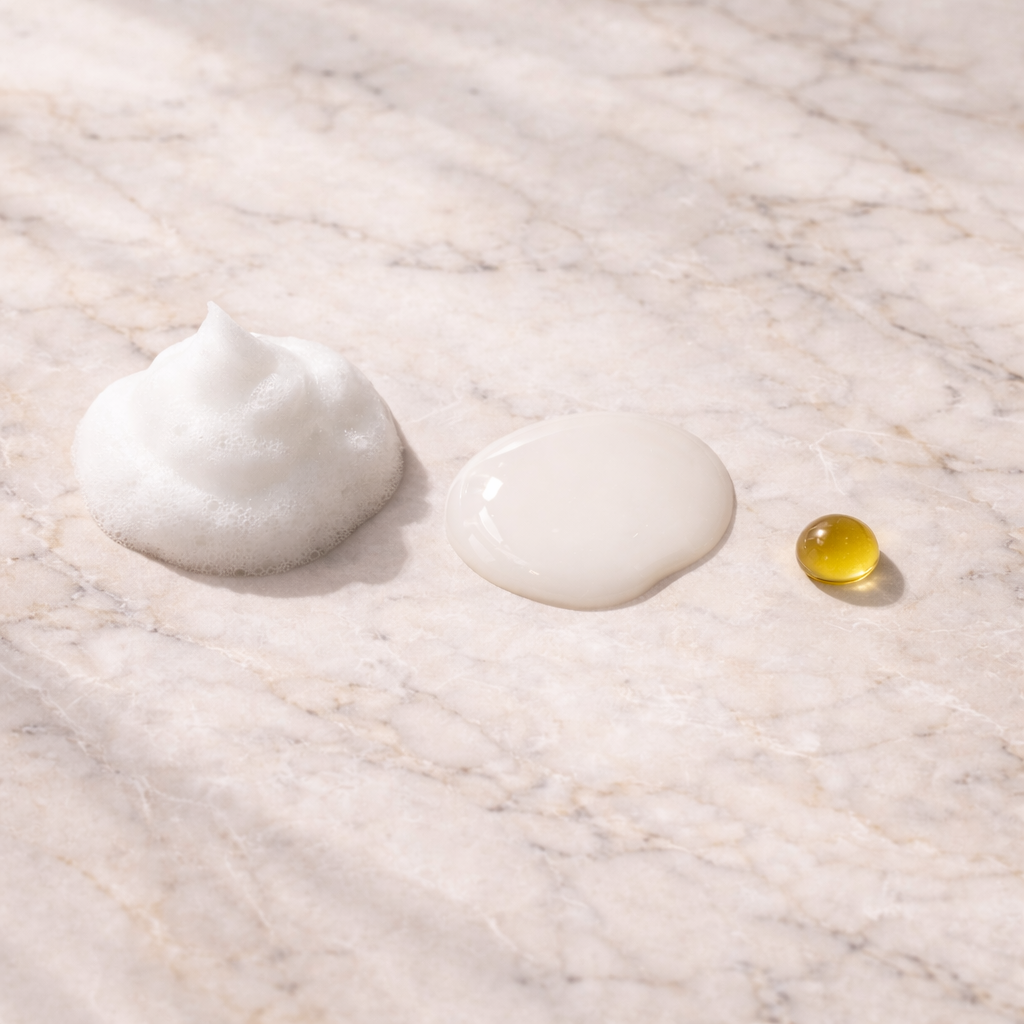
Three gentle, affordable skincare products I use every day to keep my skin calm, hydrated, and healthy.
This post contains affiliate links. If you choose to purchase through them, I may earn a small commission at no additional cost to you. I only share products I genuinely use and love.
Let’s improve the situation.
These are three skincare products that make a visible difference without requiring a personality change or a 14-step routine.
For a long time, I thought good skin required a complicated and pricey routine. Multiple steps involving serums and treatments that implied I had both the time and emotional stability to maintain them. But over time, I realized my skin looks and feels its best when I keep things simple and consistent. Sure, there are extra treatments that can be added in as needed, but these three establish order.
I’ve tried plenty of other options and always came back to these. Simple, affordable care that keeps my skin calm, soft, and healthy with no added dyes or fragrances.
Step 1: A gentle cleanser
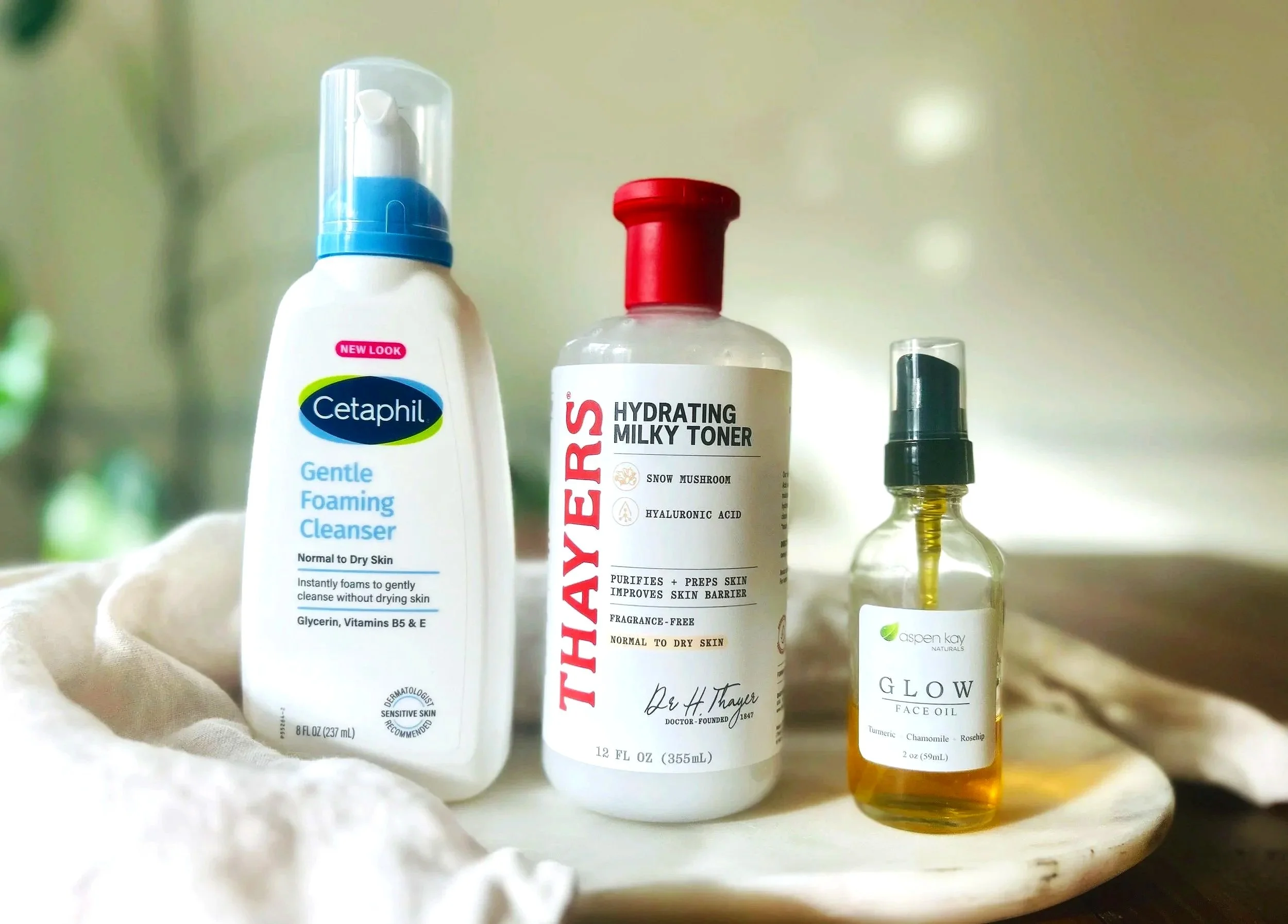
Each morning I simply give my face a good rinse with warm water, but at night I use Cetaphil Gentle Foaming Cleanser. It does exactly what I need it to do. It removes excess oil and makeup without making my skin feel tight or dry. The foam rinses right off, and my skin still feels soft and comfortable—not stripped.
Step 2: A hydrating toner
Next, I use Thayers Hydrating Milky Toner morning and night. It quietly removes anything left behind and restores a baseline level of hydration. Sometimes I use it as a traditional toner on a cotton pad, but often I just pour a small amount into my hands and press it directly into my skin. With hydrating snow mushroom and soothing elderflower and aloe vera, this toner adds immediate softness and moisturizes without feeling heavy.
Step 3: A simple face oil
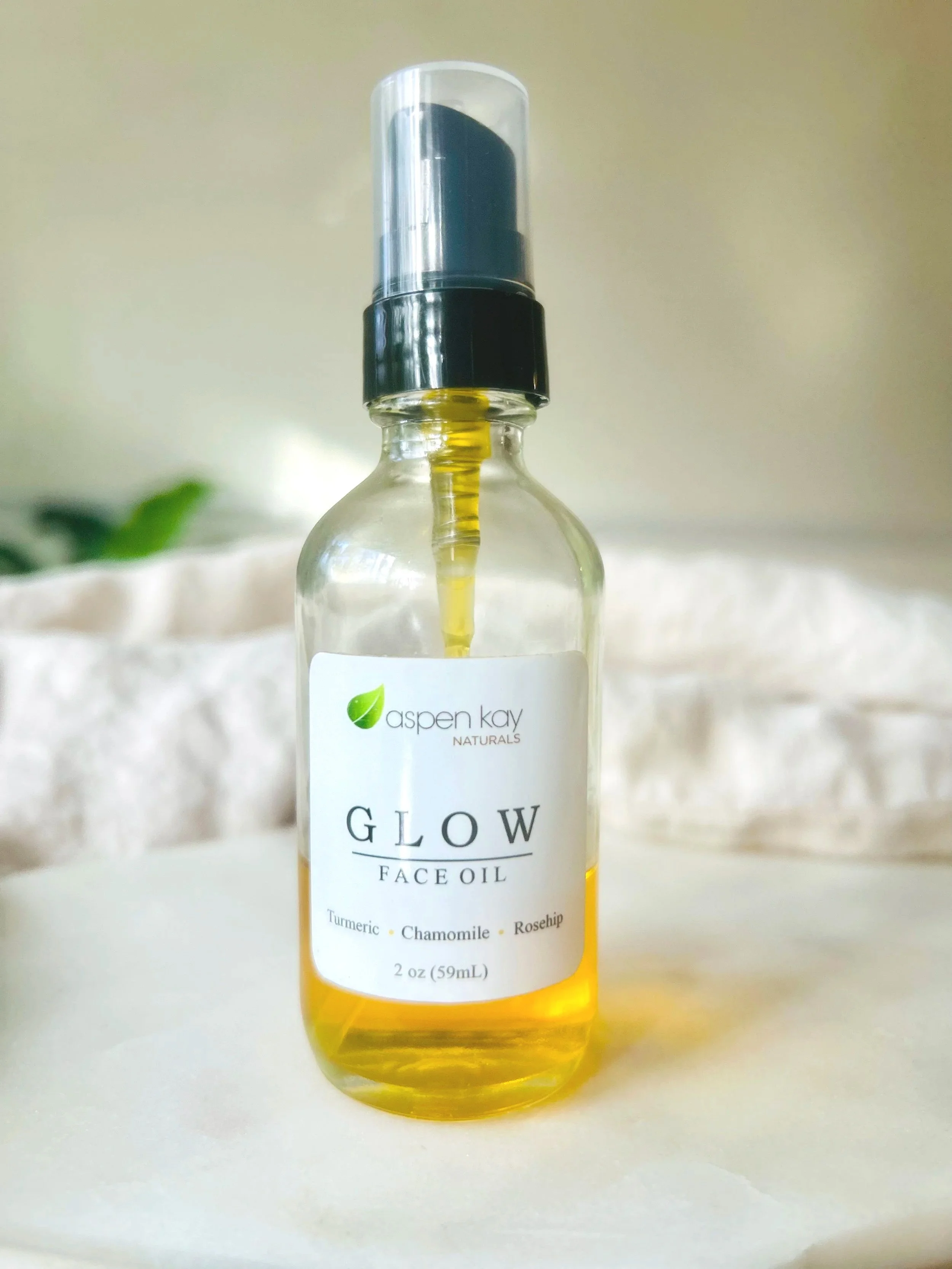
The last step is a quality face oil. It may seem counterintuitive to apply oil to your face, especially if your skin already feels oily or prone to breakouts. But your skin produces oil for a reason—it’s part of how it protects and maintains balance. When skin is repeatedly stripped with harsh or overly drying products, it can respond by producing even more oil in an effort to compensate. A well-chosen face oil helps support your skin’s natural barrier and seal in moisture, signaling that it’s safe and cared for. Over time, this can help even oily or acne-prone skin feel calmer, more balanced, and quietly healthy—never greasy, just comfortably nourished. I use Glow Face Oil from Aspen K Naturals.
One of the reasons I love the Aspen K Naturals Glow Face Oil is its thoughtful blend of calming, restorative ingredients. Turmeric helps support a brighter, more even-looking complexion, while chamomile is known for its soothing properties, making it especially helpful for skin that feels irritated or reactive. Rosehip oil is rich in essential fatty acids and vitamins that help nourish the skin and support its natural barrier. Together, these ingredients help skin feel balance, comforted, and quietly radiant.
I gently press a few drops into my skin, especially on my cheeks and forehead. This seals in moisture and leaves my skin feeling soft and comfortable. It also gives a subtle glow that makes my skin look healthier overall. Makeup or sunscreen glide effortlessly over it.
Why This Simple Routine Works
Skincare doesn’t need to be complicated to be effective. When each step supports the skin rather than overwhelms it, the result is balance. Cleansing creates a fresh foundation, toner restores comfort and hydration, and face oil seals everything in, leaving the skin feeling calm, supported, and healthy.
Anyway, that’s better.
Probably fine.